

Three words on a case back, a dial nobody wanted, and a treehouse in Connecticut. The real story of Paul Newman’s Daytona is smaller and more tender than the price it made, and it’s the reason a whole family of watches carries his name.
Three words on a case back
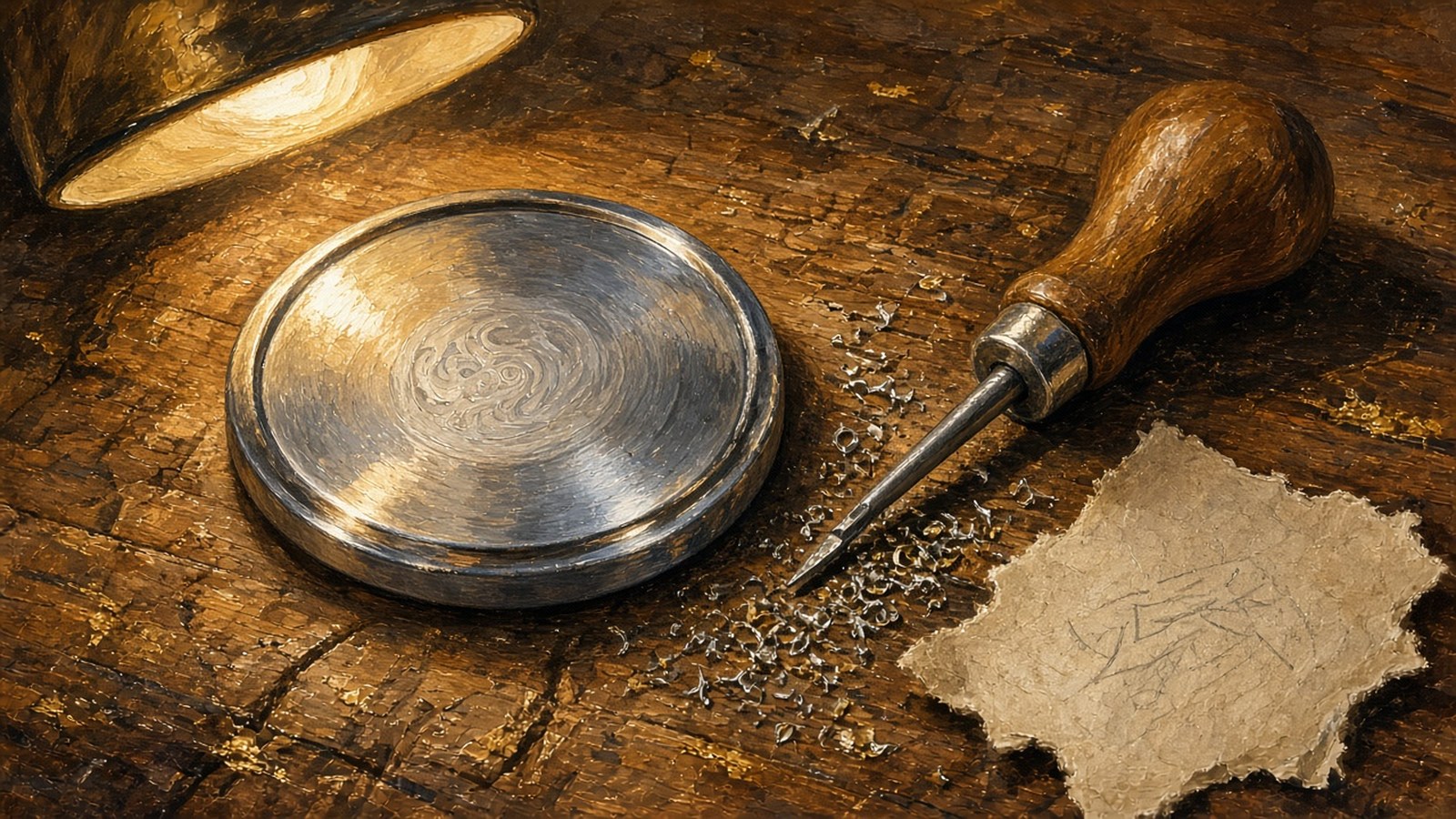
Around 1968, the actress Joanne Woodward bought her husband a steel Rolex Cosmograph Daytona, reference 6239. Phillips, which later sold it, says she most likely bought it at Tiffany & Co. in New York; Rolex’s own timeline places the gift just before filming began on Winning, the 1969 picture in which Newman played a racing driver. She had the case back engraved “DRIVE CAREFULLY ME.”
She had reason to worry. According to the couple’s daughter Clea, Newman had been badly hurt in a motorcycle accident in 1965, and Woodward was uneasy every time he went near a track. The engraving is half a joke and half a plea, signed with the single word a wife uses when the name is unnecessary.
The watch she chose had an “exotic” dial: contrasting subdials, square-tipped markers and an Art Deco-style typeface around the edge. It’s worth remembering that she chose it for how it looked. Nobody in 1968 thought it was an investment.
A racing life that started late
Newman came to racing in his forties, after Winning, and he took it seriously. He wore the Daytona to time laps at Lime Rock in Connecticut, and his eldest daughter with Woodward, Nell, has described timing him with it during weekend races. He wore it acting, working and swimming, too. Photographs of him in it are everywhere, which is how the watch and the man became linked in the first place.
Winning itself was set partly in Daytona Beach, Florida, home of the speedway that gave the watch its name, so the Daytona was on his wrist almost from the moment he took racing seriously. The film’s racing scenes gave him a taste for the real thing, and by the early 1970s he was competing.
He was far more than a celebrity in a borrowed helmet. The Sports Car Club of America inducted him into its Hall of Fame as a four-time national champion, and noted that he never once asked for special treatment at the track. In 1979 he finished second overall at the 24 Hours of Le Mans, sharing Dick Barbour’s Porsche 935 with Barbour and Rolf Stommelen, according to the race’s official records.
The watch nobody wanted

The Cosmograph Daytona arrived in 1963, a manually wound chronograph with a tachymeter scale for timing speed. Rolex had been a partner of the Daytona International Speedway in Florida since it opened in 1959, and “Daytona” soon appeared on dials meant for the American market. You can read how the model grew into today’s watch in our appraisal of the Rolex Cosmograph Daytona.
For its first two decades it sold badly. Hodinkee, reporting on the market, describes steel Daytonas sitting on dealers’ shelves behind the Day-Date, Submariner and Datejust, and the exotic-dial versions as the least wanted of all, sometimes sold at half price. The watch Woodward picked was, by the standards of its day, the odd one in the case.
That changed in the late 1980s. A small group of Italian and American dealers started buying vintage Daytonas, and according to the Italian dealer Davide Parmegiani, they grew tired of saying “exotic dial” on the phone and began calling it the “Paul Newman,” after the most famous man wearing one. The name stuck at once. Now every exotic-dial Daytona carries his name, whether he ever saw it or not. It’s the most valuable of all the Rolex nicknames.
The treehouse, 1984

In 1983, for their twenty-fifth wedding anniversary, Woodward gave Newman a newer Daytona, a reference 6263 with a black dial. Its case back read “Drive slowly Joanne.” The message hadn’t changed much in fifteen years.
Soon after, Newman gave the old 6239 away. In 1984 it went to James Cox, then Nell’s boyfriend, who had been working on a treehouse at the family’s home in Westport, Connecticut. Cox wore it for years without much idea of what it was. It was only in the 1990s, he has said, that he learned the watch on his wrist had a cult following. “It was the coolest thing I have ever had,” he told Hodinkee, “and I don’t have many things.”
Collectors knew the watch was somewhere “with the family.” For more than thirty years nobody could find it.
Twelve minutes in New York
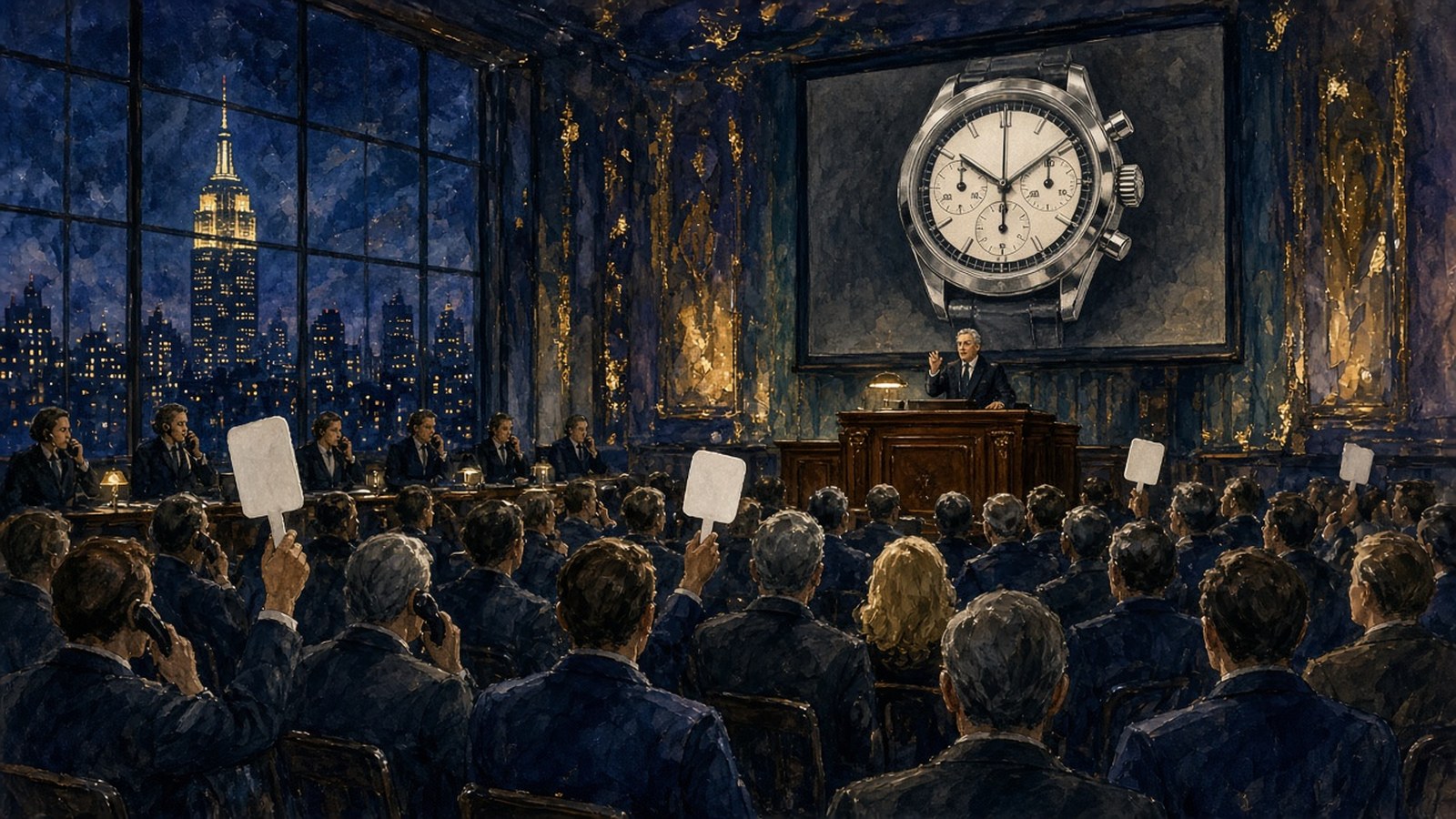
In 2016 the family’s lawyers called Aurel Bacs, the auctioneer behind Phillips’ watch department. The watch was offered on October 26, 2017, in New York, as lot 8 of a sale named “Winning Icons,” after the film. More than 800 bidders from 43 countries registered.
The bidding opened at an absentee bid of $1 million. Before Bacs could look toward the phones, a specialist called out $10 million on behalf of a client. The room laughed, then went quiet: in one bid, every paddle in the room had been priced out. Two telephone bidders took it to a hammer price of $15.5 million. With the buyer’s premium, the watch sold for $17,752,500, at the time a record for any wristwatch at auction. It had taken about twelve minutes.
Part of the proceeds went to the Nell Newman Foundation and Newman’s Own Foundation, in keeping with Newman’s own charitable work. Nell Newman, who was in the room, put it simply afterwards: “Whoever bought [the watch], I hope they understand that it comes with a moral responsibility to be philanthropic. That’s what Dad was all about.” Two details from the catalogue are worth any buyer’s attention. Phillips wrote that, in its view, the case had never been polished, which is why we’re so cautious about it in what really happens when you service a Rolex. And the record watch came with no box and no Rolex papers, only a provenance letter from Nell Newman and a framed photograph of the treehouse. We look at what that tells you in the cardboard that matters.
Big Red: the watch he wore longest
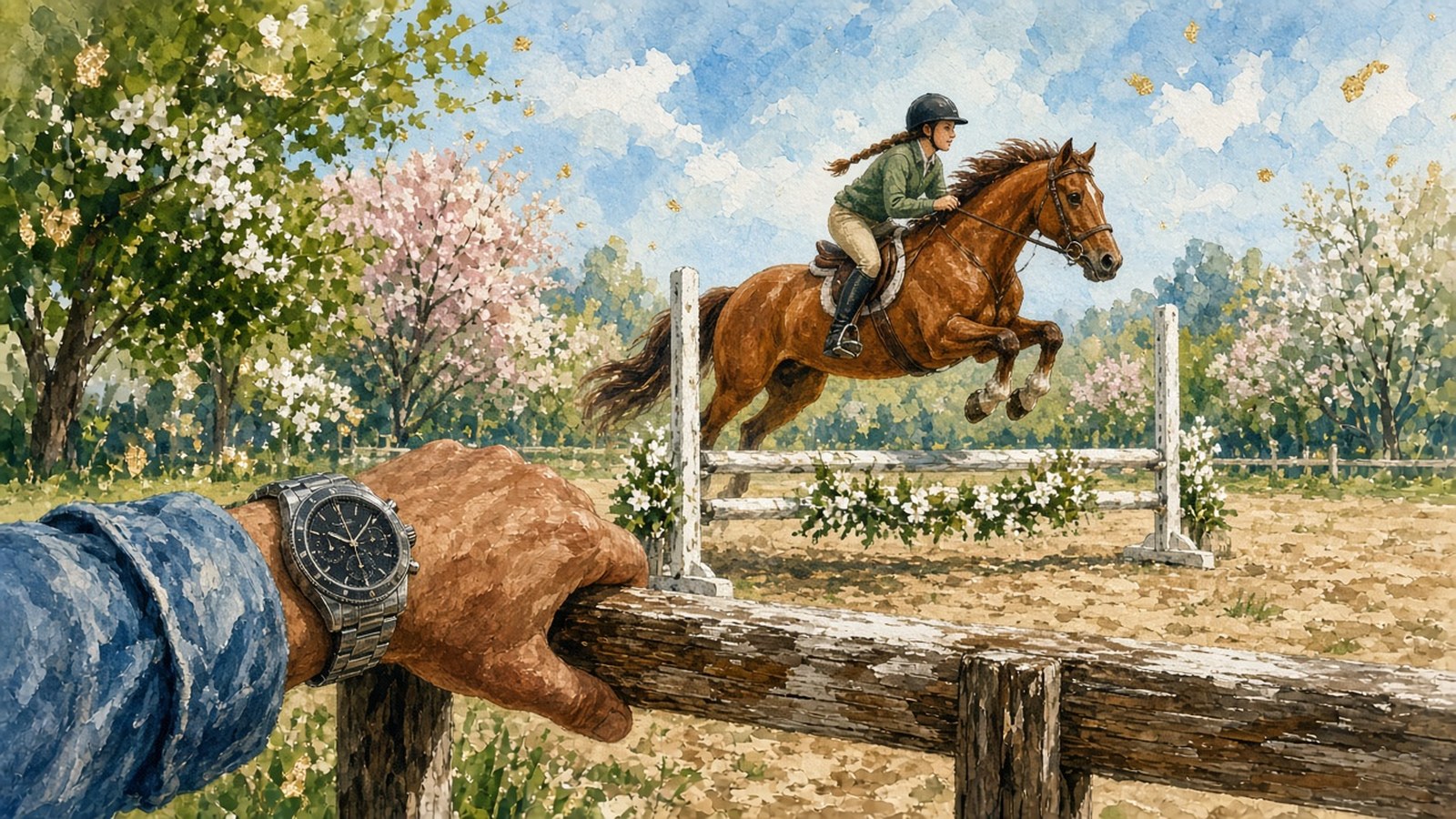
The 1983 watch, a “Big Red” Daytona named for the red word “DAYTONA” on its dial, is the one Newman wore longest. Clea Newman wrote that he wore it “nearly every day” until he gave it to her in 2008. He often wore it with the chronograph pushers unscrewed, so he could start timing at once, whether at a race or watching Clea ride at home. Phillips also records that he liked to bet friends his watch was more accurate than theirs, settle it by calling the telephone time service, and collect.
Phillips sold that watch, too, on December 12, 2020, for $5,475,000, with part of the proceeds again going to charities Newman founded.
What his watch means for a buyer

Hodinkee put it bluntly after the sale: Rolex made thousands of reference 6239s, and the 2017 price came down to provenance and market influence. The steel case and the movement were the same as thousands of others. The letter, the engraving and the man were not.
That’s a useful lesson for anyone buying a Daytona, vintage or modern. Original condition and documented history are where the value lives. A crisp, unpolished case is worth more than a shiny one. And a good story is only worth paying for when someone can prove it. Exotic dials are exactly where that matters most. Because they’re worth so much more than standard dials, they’re the part of a vintage Daytona most worth having an independent specialist examine before you buy, alongside the case, the serial and any paperwork. A seller who welcomes that scrutiny is usually the one to buy from. If you’re drawn to Newman’s style rather than his watch, the plain steel Datejust he wore as Fast Eddie Felson has its own nickname among collectors; we tell that story in our appraisal of the Rolex Datejust. Every Rolex story we’ve written is gathered in The Watches Worth Knowing.
More figureheads
Newman’s Daytona exists because one man spent half a century convincing the world to wear a watch on the wrist. Read about Hans Wilsdorf, the founder of Rolex. And for another case of a famous name attaching itself to an object the owner simply loved, read how Grace Kelly gave her name to the Hermès Kelly.
Questions people ask
What is a “Paul Newman” Daytona?
It’s a collectors’ name for vintage manual-wind Rolex Daytonas with an “exotic” dial: contrasting subdials, square-tipped markers and an Art Deco-style typeface. Dealers coined it in the late 1980s because Newman was so often photographed wearing one. Rolex doesn’t use the name.
How much did Paul Newman’s own Daytona sell for?
His reference 6239, engraved “DRIVE CAREFULLY ME,” sold at Phillips in New York on October 26, 2017, for $17,752,500 including buyer’s premium. His later reference 6263, engraved “Drive slowly Joanne,” sold at Phillips on December 12, 2020, for $5,475,000.
Did Paul Newman own more than one Daytona?
Yes. Phillips says he was seen wearing several generations of Daytona. The two best documented are the 6239 his wife gave him around 1968 and the 6263 “Big Red” she gave him in 1983.
Sources
- Phillips, Lot 8, Rolex Cosmograph Daytona “Paul Newman” ref. 6239, Winning Icons, New York, Oct 26, 2017
- Phillips, Lot 38, Rolex Cosmograph Daytona “Big Red” ref. 6263, Racing Pulse, New York, Dec 12, 2020
- Phillips, press release: Paul Newman’s “Big Red” Daytona consigned by Clea Newman Soderlund (Oct 29, 2020)
- Rolex, Cosmograph Daytona, “Born to race”
- Hodinkee, “In-Depth: The Sale Of Paul Newman’s Rolex Daytona” (Oct 27, 2017)
- The Hollywood Reporter, “Paul Newman’s Legendary Rolex Watch Shatters Record At Auction”
- Forbes, “Paul Newman’s Rolex Sells For Record $17.8-million” (Oct 26, 2017)
- The Nell Newman Foundation, “The Watch”
- SCCA Hall of Fame, Paul Newman
- 24 Hours of Le Mans, Winners & Records 1979