
He never made a watch with his own hands, and he never claimed to. What Hans Wilsdorf made was the case for the wristwatch, argued patiently over half a century, until the rest of the world agreed with him. This is the story of the man behind the crown, and why it still matters when you turn a pre-owned Rolex over in your hand.
An orphan with a head for languages

Hans Wilsdorf was born in Kulmbach, in Bavaria, on March 22, 1881. His mother died when he was a boy, his father soon after, and at twelve he was an orphan. His uncles sold the family’s iron-tools business and sent the children to boarding school. Wilsdorf later wrote that the way they made him self-reliant so early taught him to look after his own affairs, and that “much of my success is due” to it.
School gave him two things he would use for the rest of his life: mathematics and languages. He started out as an apprentice with a pearl-exporting firm, which taught him how fine goods cross borders. In 1900, at nineteen, he moved to La Chaux-de-Fonds in Switzerland, the heart of the watch trade, to work as an English-language correspondent and clerk for the watch exporter Cuno Korten.
The job was humbler than it sounds. Part of it, according to accounts of his time there, was winding hundreds of pocket watches a day and checking that they kept time. A young man who winds that many watches learns very quickly which ones are good.
London, 1905: two names on the door

Wilsdorf moved to London, and in 1905, at twenty-four, he founded a watch distribution company with his brother-in-law, Alfred Davis. It was called Wilsdorf & Davis. Rolex dates its own beginning to that year.
The business was simple on paper. The firm bought small, precise movements from a Swiss maker in Bienne, the Aegler firm, had them fitted into cases, and sold the finished watches to jewelers. The difficult part was the product itself. At the turn of the century, the wristwatch was widely seen as fragile, imprecise and, for men, faintly ridiculous. Gentlemen carried pocket watches. Wilsdorf thought that would change, and he bet the firm on being early.
In 1908 he registered the name he wanted on the dials: Rolex. He wanted something short, easy to say in any language and small enough to fit neatly on a watch face. Rolex quotes his own account of how it arrived: “I tried combining the letters of the alphabet in every possible way. This gave me some hundred names, but none of them felt quite right. One morning, while riding on the upper deck of a horse-drawn omnibus along Cheapside in the City of London, a genie whispered ‘Rolex’ in my ear.”
It’s a lovely story, and it’s his. Nobody else was on that omnibus to confirm it.
Proof before advertising
Wilsdorf understood that nobody would take a wristwatch seriously because a salesman said so. He needed paper from people with no reason to flatter him.
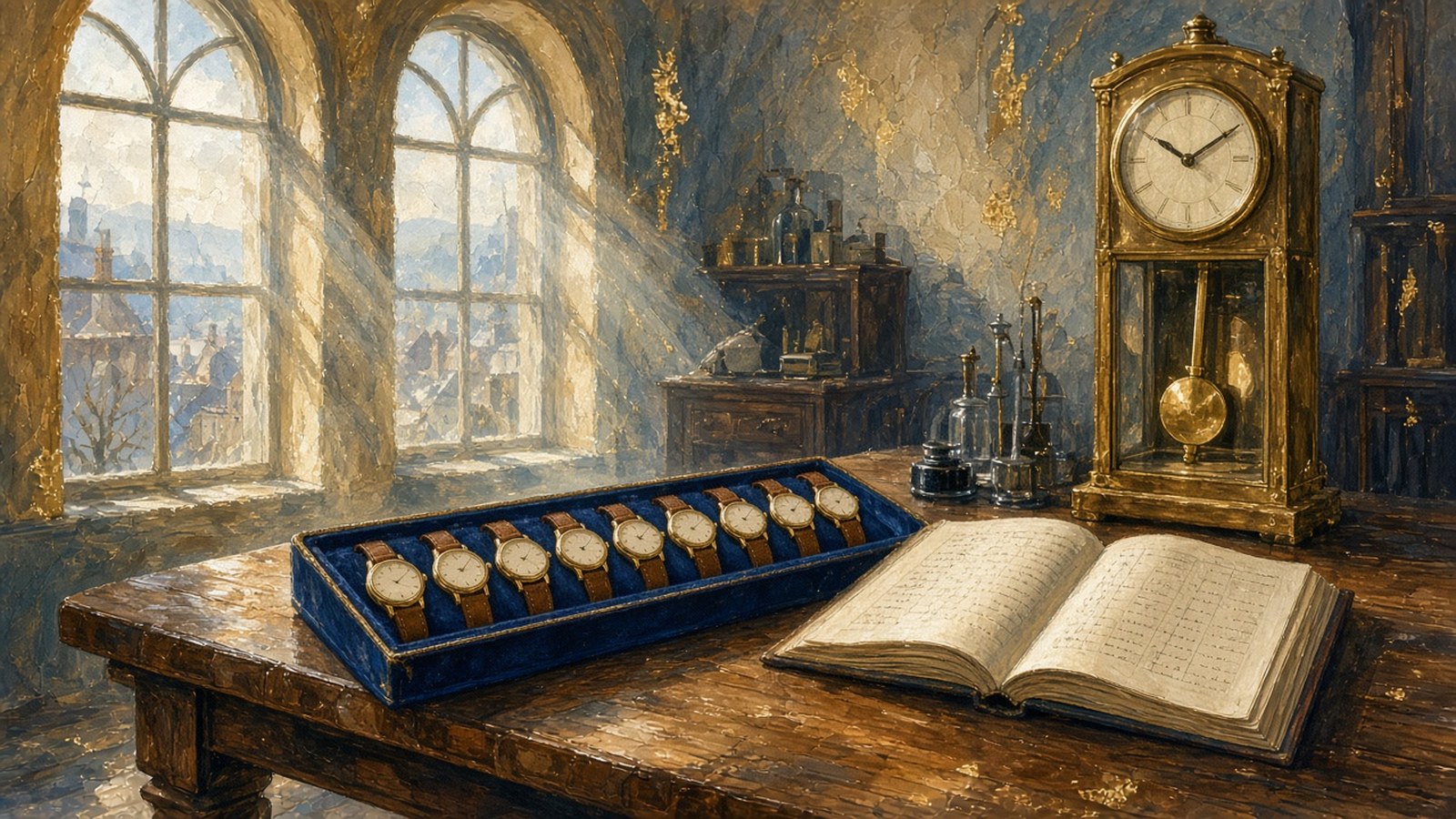
In 1910, a Rolex became the first wristwatch in the world to receive the Swiss Certificate of Chronometric Precision, from the official watch rating center in Bienne. In 1914, Kew Observatory in Britain awarded a Rolex wristwatch a class “A” precision certificate, a grade that, Rolex notes, had until then gone only to marine chronometers, the big clocks ships navigated by. A watch the size of a coin had passed a test written for instruments in wooden boxes.
The same year, Wilsdorf wrote to Aegler in Bienne: “We must find a way to create a waterproof wristwatch.” Precision was settled. Dust and water were next.
The First World War changed the company’s address. Britain raised import duties sharply during the war, and Wilsdorf moved the business to Switzerland, first to Bienne and then to Geneva, where Montres Rolex S.A. was registered in 1920. Historian Pierre-Yves Donzé, who has written a business history of the company, describes the arrangement that followed: Wilsdorf’s firm handled marketing, advertising and sales, and Aegler handled manufacturing. It was a division of labor that lasted for decades.
The Oyster, and a swim that didn’t finish
The waterproof case took a dozen years. In 1922 Rolex tried the Submarine, a watch hinged inside a second, sealed outer case that had to be opened to wind it. It worked, but it was awkward. In 1926 came the real answer: the Oyster, with a bezel, case back and winding crown that screwed down against the middle of the case. Wilsdorf explained the name himself. “Like an oyster,” he said, “it can remain an unlimited time under water without detriment to its parts.”
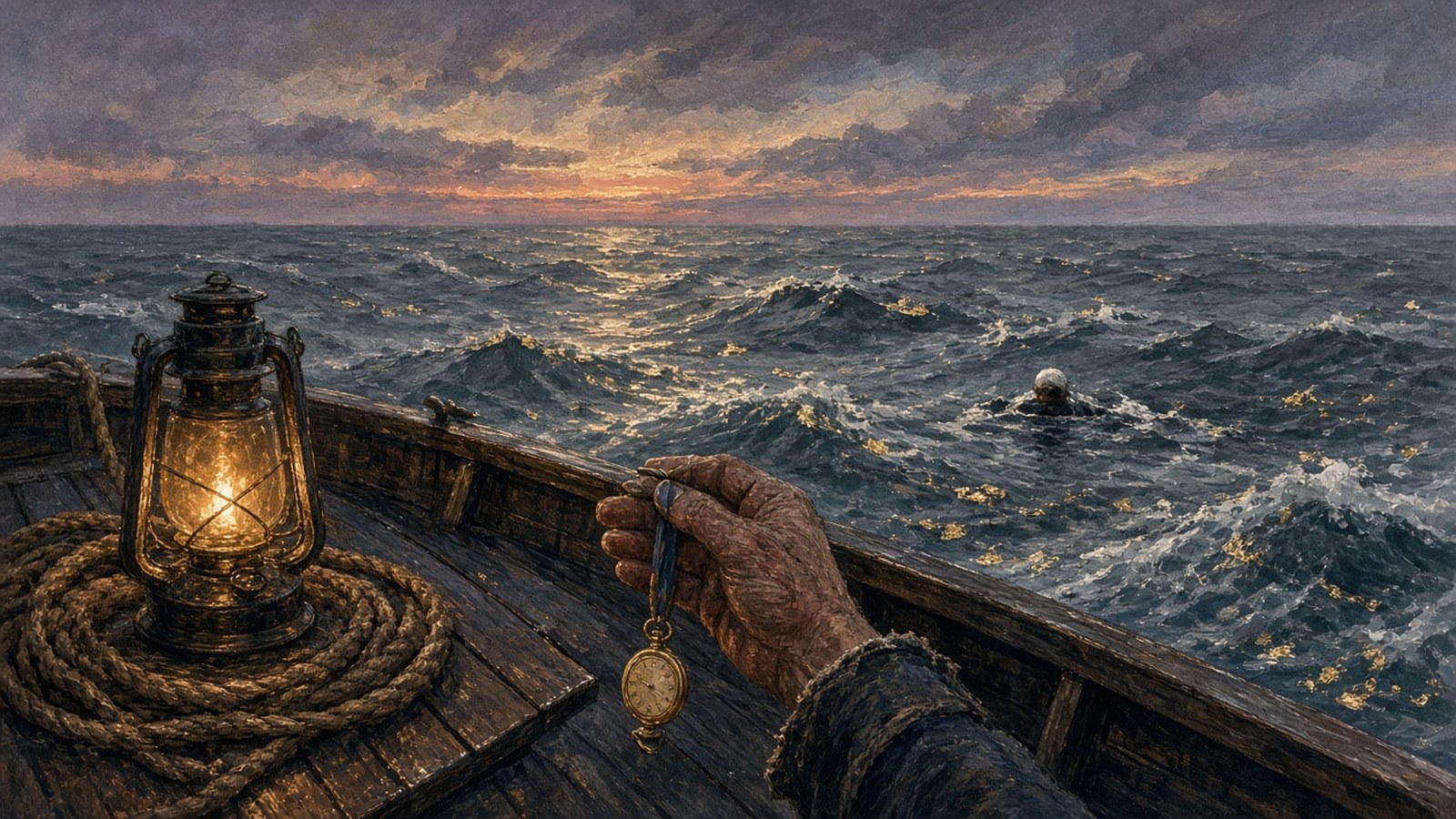
Then he needed proof again, and this time he wanted the public to see it. In October 1927 he gave an Oyster to Mercedes Gleitze, a young secretary from Brighton who had just become the first British woman to swim the English Channel and was swimming again to silence doubters. She carried the watch on a ribbon around her neck. She didn’t finish the second crossing; she was pulled from the cold water after more than ten hours. The watch, by The Times’ account, “kept good time throughout.”
Wilsdorf took a full-page advertisement on the front of the Daily Mail. Rolex counts that page as the birth of its “Testimonee” idea, the practice of letting accomplished people speak for the watch. We’ve told the full, more human version of Gleitze’s swim in our appraisal of the Rolex Oyster Perpetual, the purest descendant of that case.
The third piece arrived in 1931: the Perpetual rotor, a free-swinging weight that wound the watch with the movement of the wrist. Rolex calls it the world’s first self-winding mechanism with a perpetual rotor. By 1931, the year Wilsdorf turned fifty, precision, waterproofness and self-winding were all in place. In 1945 they came together on the Rolex Datejust, the first self-winding wrist chronometer to show the date in a window on the dial. Rolex’s own history says Wilsdorf offered one to Winston Churchill, who chose rose gold.
A second brand, and a war
Wilsdorf also saw that not every jeweler’s customer could afford a Rolex. In 1926 the trademark “The Tudor” was registered on his behalf, and on March 6, 1946, he founded Montres Tudor S.A. in Geneva. Tudor quotes his reasoning plainly: he wanted “a watch that our agents could sell at a more modest price than our Rolex watches, and yet one that would attain the standard of dependability for which Rolex is famous.”
During the Second World War, he made a gesture that collectors still talk about. British officers held in prisoner-of-war camps, whose watches had been confiscated, could write to Rolex and order a replacement, to be paid for after the war. In 2022, Christie’s sold a Rolex Oyster Chronograph that had belonged to Gerald Imeson, a prisoner at Stalag Luft III who took up that offer, for $189,000.
The foundation that owns the crown

Wilsdorf’s first wife, Florence, died in 1944. In 1945 he created the Hans Wilsdorf Foundation, which still owns and controls Rolex. He died in Geneva on July 6, 1960, at seventy-nine.
The arrangement is the most unusual thing about Rolex today. The foundation describes itself as a private shareholder foundation and the owner of the Rolex group. Its income comes from Rolex’s dividends, and it funds social, educational, cultural and humanitarian work, mostly in and around Geneva. There are no outside shareholders to answer to and no quarterly calls. It goes a long way to explaining why Rolex changes its watches so slowly. A company that isn’t for sale has little reason to hurry.
What Wilsdorf means for a pre-owned Rolex
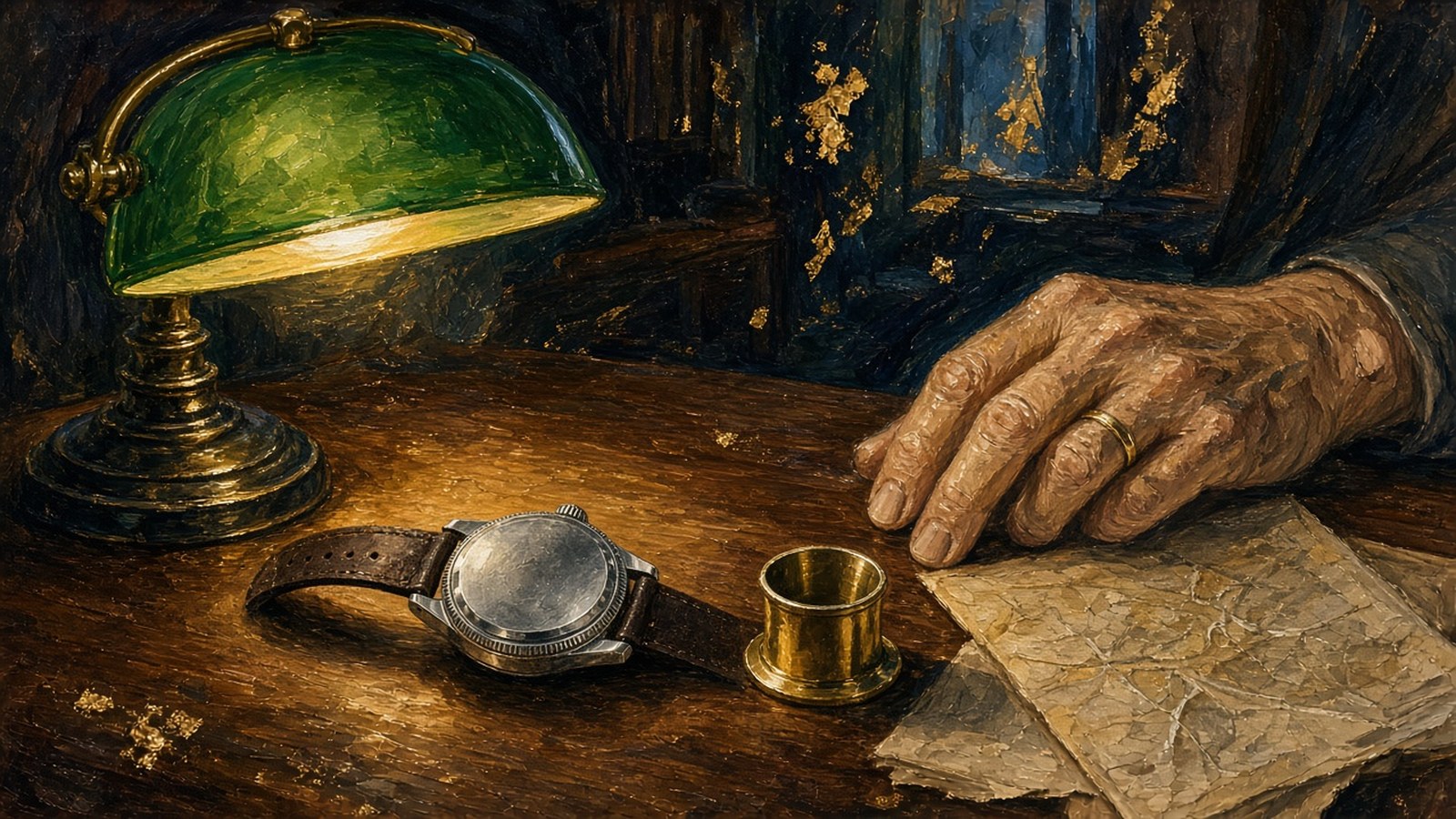
Almost everything a buyer checks on a second-hand Rolex traces back to decisions Wilsdorf made before 1950. The screw-down crown and case back are the Oyster of 1926, which is why a worn crown tube or a tired gasket matters more on a Rolex than on most watches. The rotor that winds it is his Perpetual of 1931, which is why even a gold Day-Date carries “Oyster Perpetual” on its dial. The habit of chasing certificates became the word “Chronometer” on the dial. Even the idea that a famous wearer adds value began with a swimmer and a newspaper page.
So when you look at a pre-owned piece, look the way he would have: at the evidence, not the story. Ask when it was last serviced, and by whom; our guide to servicing a Rolex explains what a proper overhaul involves. Ask what came with it, and read our note on what box and papers really mean for a Rolex before you pay extra for cardboard. And if the nicknames confuse you, start with the stories behind Rolex nicknames.
Wilsdorf believed a watch should earn its reputation in the water, in the cold and on the test bench before anyone advertised it. A century later, the best pre-owned pieces still make that case quietly. For a watch that took his ideas to the ends of the earth, read our appraisal of the Rolex Explorer II, or browse every story in The Watches Worth Knowing.
More figureheads
Rolex made the watches; other people made some of them legends. Read how an actor’s wife and a slow-selling chronograph created the Paul Newman Daytona, and how a princess, a camera and a saddler’s bag became the Hermès Kelly. Rolex is one of several great houses whose beginnings still show in a pre-owned piece; we trace the others in The Maisons.
Questions people ask
Who founded Rolex?
Hans Wilsdorf, a Bavarian-born watch distributor, founded the business in London in 1905 with his brother-in-law Alfred Davis as Wilsdorf & Davis. He registered the Rolex name in 1908 and moved the company to Geneva after the First World War.
Where does the name Rolex come from?
Wilsdorf said he tried hundreds of letter combinations and that the name came to him on the upper deck of a horse-drawn omnibus along Cheapside, in the City of London. He wanted a short name that was easy to say in any language and fit neatly on a dial.
Who owns Rolex today?
The Hans Wilsdorf Foundation, which Wilsdorf created in 1945. It’s a private foundation, it owns the Rolex group, and it funds charitable work from Rolex’s dividends.
Sources
- Rolex, History 1905–1919
- Rolex, History 1926–1945
- Rolex, “Behind the crown: Mastering waterproofness”
- Rolex, “Oyster Story: A visionary undertaking”
- Fondation Hans Wilsdorf, “The Foundation”
- Tudor, “The origins: 1926 to 1949”
- Pierre-Yves Donzé, “Hans Wilsdorf’s early career,” in The Making of a Status Symbol (Manchester University Press)
- Wikipedia, Hans Wilsdorf
- Wikipedia, Mercedes Gleitze
- Watch Museum, Hans Wilsdorf biography