
The day of the week spelt out in full, a case that only comes in gold or platinum, and a bracelet with a nickname of its own. How Rolex’s flagship became the watch of presidents and golfers, what owners really do with theirs, and what you’re paying for.
As an Amazon Associate I earn from qualifying purchases. Finely Owned is independent and isn’t affiliated with Rolex.
The verdict
A pre-owned Rolex Day-Date is worth it if you want gold to do the talking: it is made only in gold or platinum and wears the President bracelet. A five-digit 18038 is a sensible way in, and the quartz Oysterquartz is a collector’s piece. Put condition and originality first, because gold is soft and polishing shows.
Read the honest downsides and before you buy.
Best for evening wear
Saves it in your cart for later. No purchase until you check out.
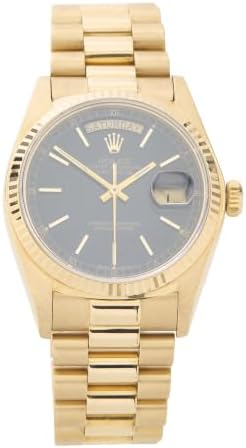
A black dial on yellow gold: reference 18038, the five-digit 36mm with a sapphire crystal and a quickset date. Listed as pre-loved, sold by What Goes Around Comes Around.
Collector’s note: pre-owned. Offered by What Goes Around Comes Around, an independent reseller. Authenticated by the seller. Returns follow Amazon Luxury policy. Listings change, and price and availability are set by the seller on Amazon. Ask the seller for the serial and papers before you buy. Finely Owned is independent and isn’t affiliated with Rolex. As an Amazon Associate I earn from qualifying purchases.
The appraisal

She’s at the head of a long table, the last one still sitting after a board lunch, reading glasses pushed up into her hair. Her left hand is flat on a stack of papers.
It’s yellow gold, all of it: case, bezel and bracelet. That alone narrows it down, because Rolex doesn’t make this watch in steel. The bezel is fluted, cut into fine ridges that catch the light from the window. The bracelet has three rounded links across its width, and there’s no clasp in sight. It hides inside the links.
Then the dial. Above the hands, an arched window spells out the day in full: THURSDAY, not THU. At three o’clock, under a small magnifying bubble, is the date. Two windows, one at twelve and one at three. That’s the giveaway, and it’s the whole point of the watch.
The smaller things tell the rest. The gold has a soft, even glow, with fine hairline scratches on the bracelet but nothing deep, so it’s worn and cared for rather than kept in a drawer. The bracelet sits close, with no sag between the links. Whoever owns this has had it a while and had it serviced.
What does it say about her? That she doesn’t need anyone to ask what she does. It’s one of the most recognisable watches in the world, and she wears it to a lunch about quarterly numbers. That’s the quiet confidence of someone who stopped proving things a long time ago.
Where it came from
A flagship with a full day
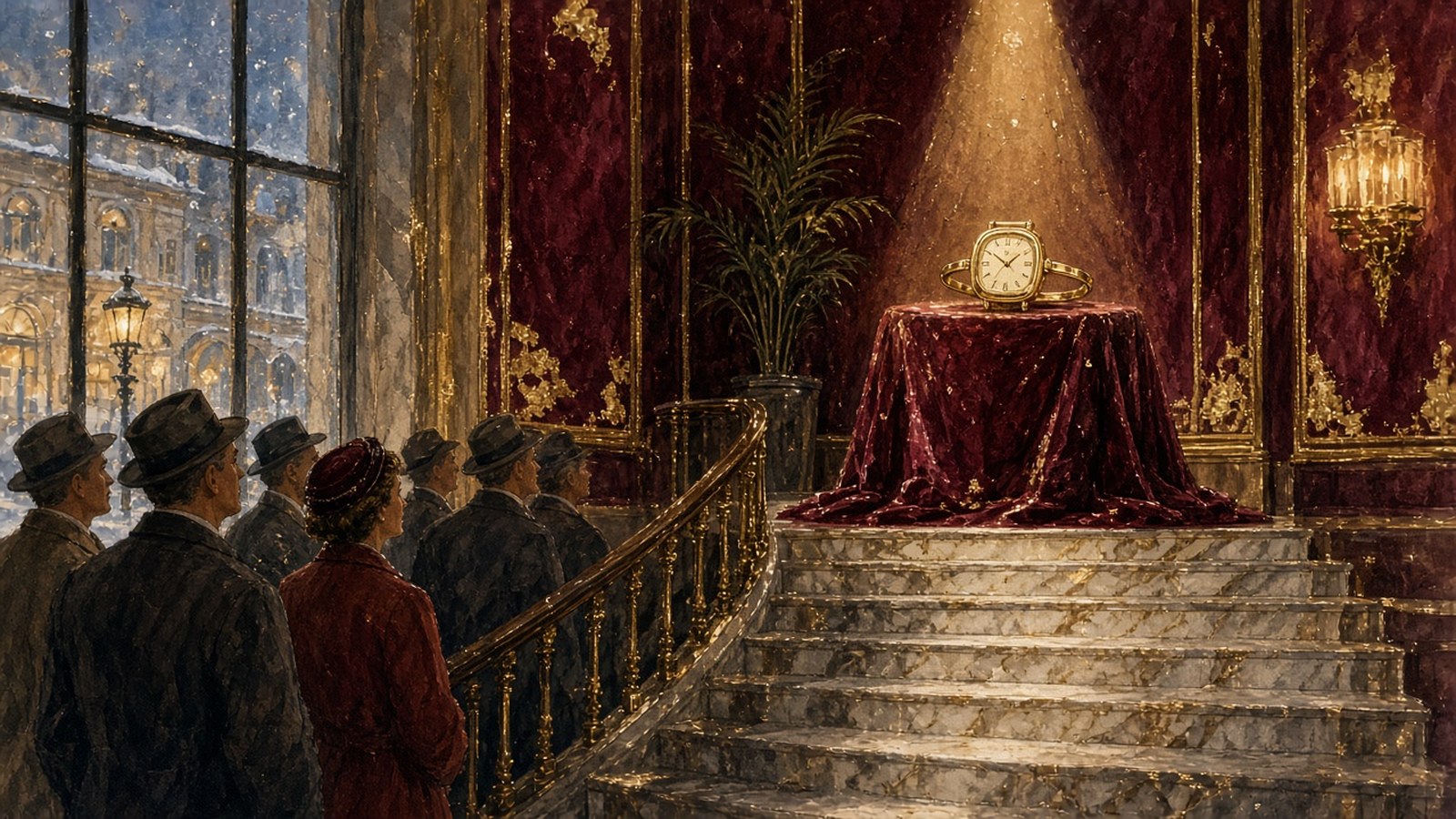
Rolex introduced the Day-Date in 1956, and says its day display, spelt out in full, has never been abbreviated. According to Hodinkee, it was the first wristwatch to spell out all seven days of the week, thanks to an extra-wide window at twelve o’clock. Rolex filed the patent in July 1955, and Hodinkee notes that both it and an earlier 1950 Swiss patent credit Marc Huguenin with the idea.
It was a calculated move. Hodinkee reports that Rolex had just stopped making two complicated triple-calendar moonphase watches that didn’t sell well. The Day-Date gave Rolex a prestigious “complication” without the fragility, and it went straight to the top of the catalogue. Paul Boutros of Phillips told Hodinkee that Rolex “considered it their flagship.”
Gold only, almost always

From the start, the Day-Date came in precious metal: yellow, white or rose gold, and platinum. Rolex still describes it as available exclusively in precious metals. Hodinkee says the only exceptions were a tiny number of early prototypes, and Wikipedia records six steel watches made as prizes for students of the Geneva watchmaking school.
Why everyone calls it the President

The nickname comes from the bracelet. Rolex used the name “President” for the Day-Date’s three-link bracelet, and Hodinkee notes that researcher Nick Gould found an Italian newspaper clipping using it as early as 1957. The name stuck to the whole watch after it appeared on the wrist of Lyndon B. Johnson in the 1960s, and Hodinkee says Gerald Ford, Bill Clinton and Donald Trump were later associated with it too. Today’s Day-Date hides its clasp under a small crown-shaped lever that Rolex calls the Crownclasp.
Twenty-six languages and two sizes

Rolex says the day disc has been offered in 26 languages since 1973, from English and Arabic to Hebrew, Japanese and the Ge’ez script of the Horn of Africa. The watch was 36mm for decades. Rolex tried a 41mm Day-Date II in 2008, which Hodinkee calls a rare misstep, and replaced it in 2015 with the Day-Date 40. Both 36mm and 40mm are made today.
Stella, Khanjar and the dials nobody expected
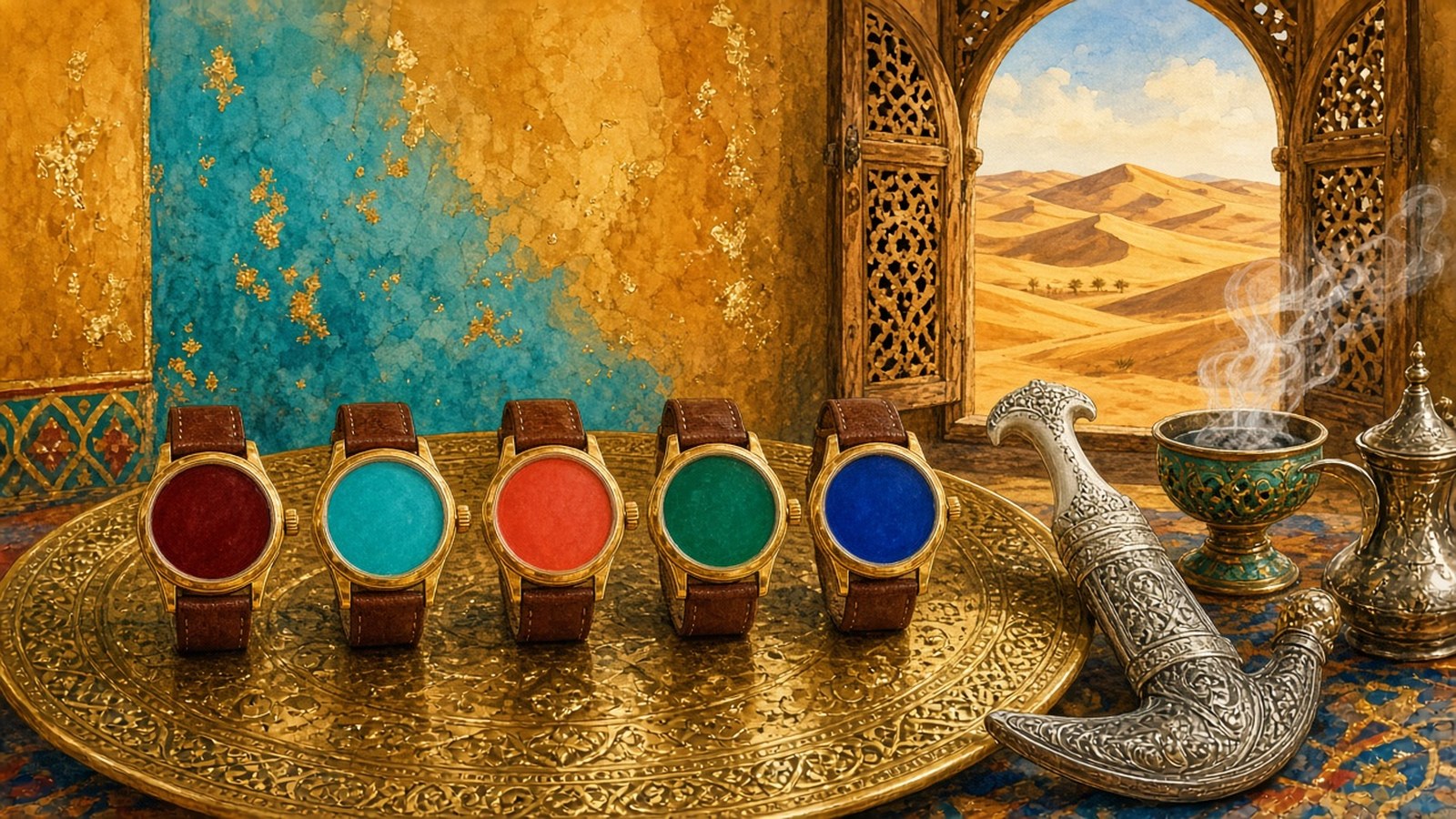
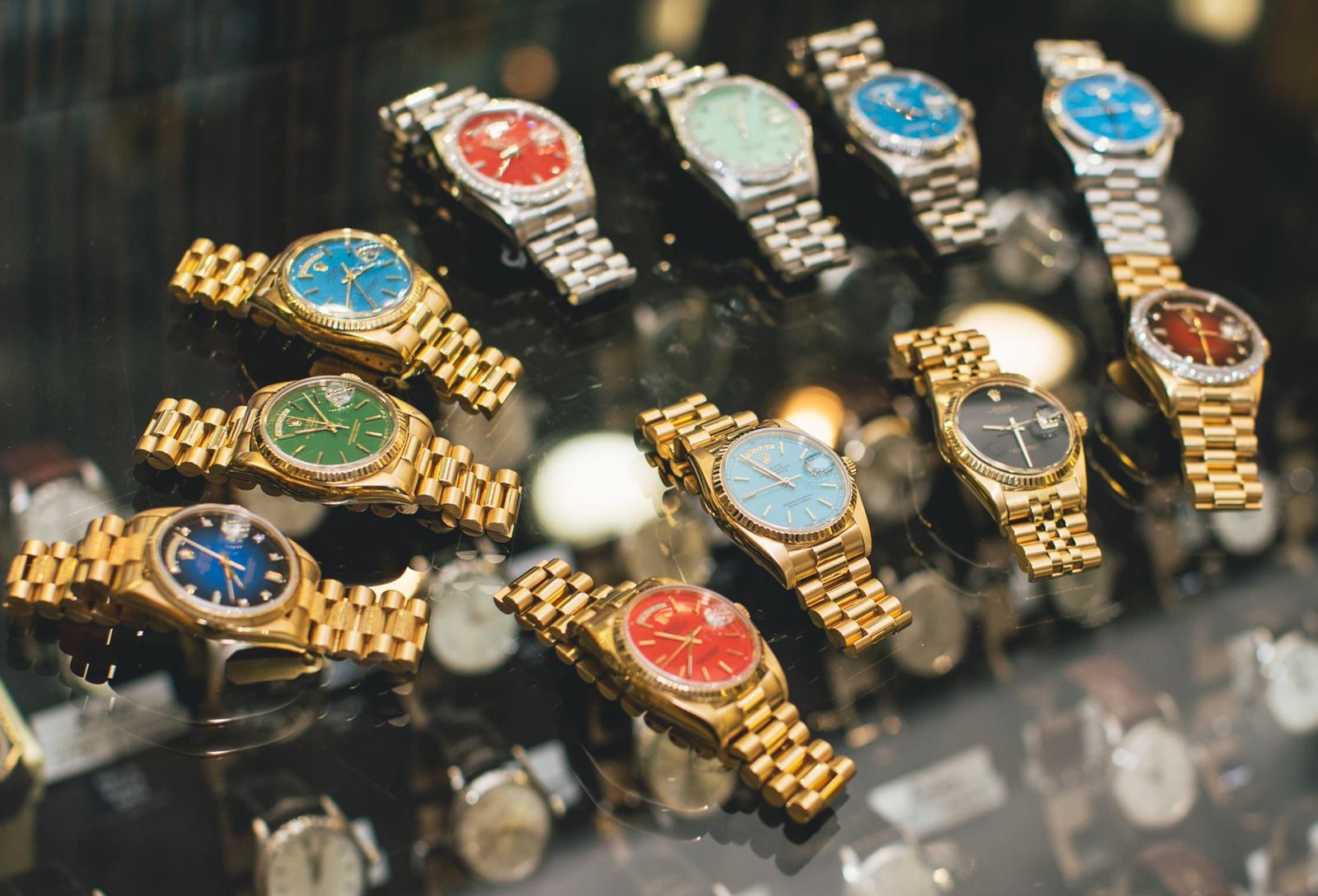
The Day-Date is where Rolex lets itself play. In the 1970s, according to Wikipedia, Rolex made brightly lacquered “Stella” dials for Middle Eastern and Asian markets. Hodinkee describes hardstone dials, Eastern Arabic numerals offered since the late 1950s, and watches commissioned by Sultan Qaboos of Oman bearing the Khanjar, the national emblem, on the dial or case back. Collectors call them all Day-Dates. Most people would never guess they’re Rolex at all.
Best for the classic President look

Saves it in your cart for later. No purchase until you check out.
Champagne on gold, the Day-Date most people picture when they hear “President.” Also listed as reference 18038, so set it beside the black dial above and compare condition, papers and price. Listed as pre-loved, sold by What Goes Around Comes Around.
Collector’s note: pre-owned. Offered by What Goes Around Comes Around, an independent reseller. Authenticated by the seller. Returns follow Amazon Luxury policy. Listings change, and price and availability are set by the seller on Amazon. Ask the seller for the serial and papers before you buy. Finely Owned is independent and isn’t affiliated with Rolex. As an Amazon Associate I earn from qualifying purchases.
Famous wrists and moments

The golfer who kept it in a sock
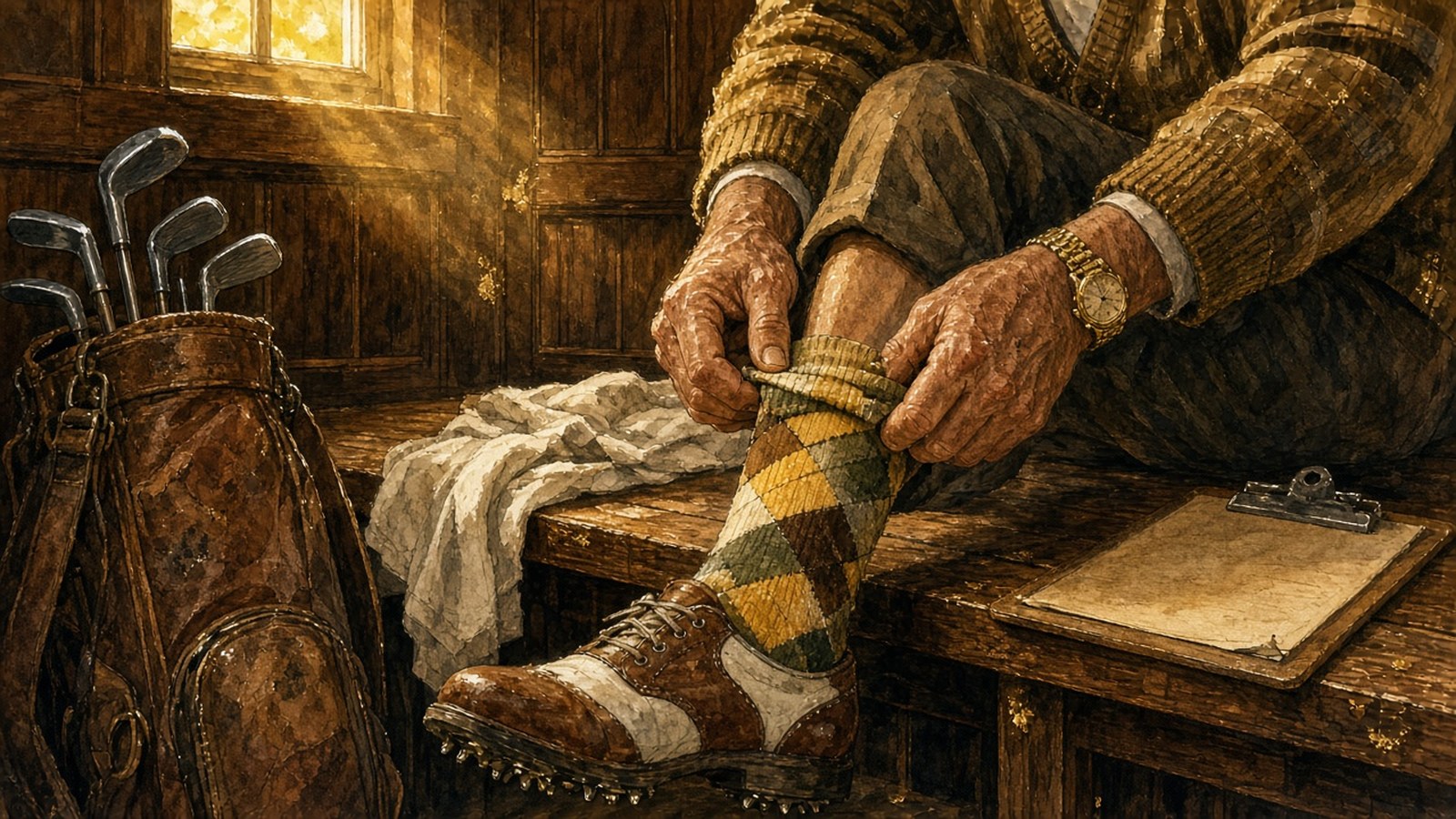
Rolex gave Jack Nicklaus a yellow gold Day-Date in 1967. According to Hodinkee, he carried it with him, usually wrapped in a sock in his golf bag, while winning 12 of his 18 major championships. Phillips sold it in New York in December 2019 for $1.22 million, with all of the proceeds going to the Nicklaus Children’s Health Care Foundation. Hodinkee says it was the first Day-Date to pass a million dollars at auction.
A birthday present, and a legend
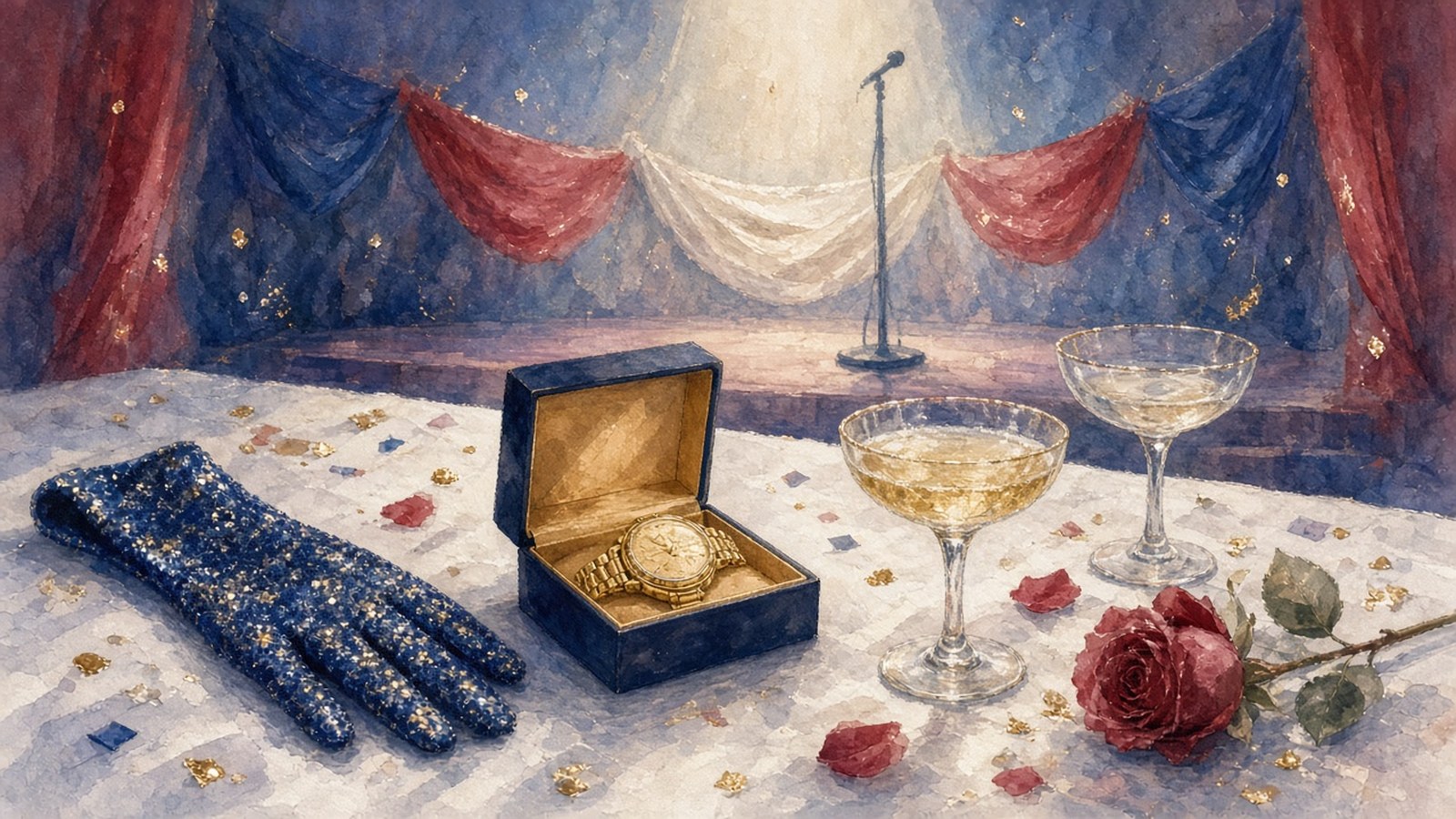
The most famous Day-Date story may not be true. In May 1962, Marilyn Monroe sang “Happy Birthday” to President Kennedy, and a gold Rolex engraved “Jack, With love as always from Marilyn May 29th 1962” is said to have been her gift. CBS News reported in October 2005 that a watch with that inscription sold at auction for $120,000. Hodinkee has since reported that its serial number appears to date it to 1965, two years after Kennedy’s death. Treat it as a good story, not a fact.
The record nobody noticed

In February 2022, a white gold Day-Date set with diamonds and rainbow sapphires, signed on the back with the Omani Khanjar, sold at a Sotheby’s online sale for more than $1.33 million. According to Hodinkee, its first owner received it in 1984 from Sultan Qaboos, and it set a new auction record for the model. Hodinkee’s point was that hardly anyone noticed.
The wrists Rolex names today

Rolex currently names skier Lindsey Vonn, conductor Yannick Nézet-Séguin, golfers Tiger Woods and Scottie Scheffler, tenor Jonas Kaufmann and director Martin Scorsese among the people who wear the Day-Date.
What owners say

These are owners’ own accounts, paraphrased in our words. Each is one person’s experience, not a fact about every watch.
The father’s watch that was too flashy. On the Rolex Forums, a new member wrote in January 2019 that his late father had left him a yellow gold “President” with a diamond bezel and dial, bought around the time he was born in 1980. His father had been a teacher for 20 years before starting his own business, and bought the watch then. He loved it so much that, in hospital, he tried to stop a nurse from taking it off. The son admitted he wasn’t a flashy person and had thought about trading it for a Daytona. Dozens of members urged him to keep it, and several noted from his description that it might be the quartz Oysterquartz version, which explained the service center’s talk of a battery. He decided to keep it and have it serviced, and was thinking about a plain bezel and dial. Members told him to keep the diamond originals if he did.
The second one, because his wife took the first. In a March 2012 thread, a collector explained that his wife had taken over his gold Day-Date, so he went looking for another. He found an old 1803 with a pie-pan dial (the dial slopes at the edges like an upturned pie dish), the original acrylic crystal and sharp, unpolished lug edges with a single ding. He loved it, but admitted the old clasp hurt his fingernails and that setting the date without a quickset was a chore. A newer Day-Date was better in every technical way, he said, but cost about three times as much.
The dial that didn’t match. In a September 2026 thread, a son asked about his father’s white gold Day-Date with an oxblood Stella dial and yellow gold hands. Members said that dial and those hands usually belong to a yellow gold watch. One said it could be genuine with a dial swapped in later, but more likely the dial wasn’t factory. Another pointed out that the diamond bezel sat slightly off-center, and that diamond bezels were often added later as an upgrade.
The buying guide
More appraisals: The Watches Worth Knowing: Stories Behind the Dials, including the Rolex Datejust, the Day-Date’s steel-and-gold cousin with the same fluted bezel, and the Rolex Submariner. For the bracelet and dial nicknames, see the stories behind Rolex nicknames.
Which Day-Date
- Vintage (four-digit references, such as the 1803). Acrylic crystal, often a pie-pan dial, and no quickset for the date. The most character, and the most to check.
- Sapphire and quickset (five-digit references, from the late 1970s). A sapphire crystal and, later, a quickset for both day and date. The Oysterquartz Day-Date of the same era runs on a battery.
- The six-digit 36mm (from 2000). An improved bracelet and clasp, still the classic size.
- Day-Date II (2008 to 2015). The 41mm version. Bigger, and short-lived.
- Current 36 and 40. The 40mm has a newer movement with about 70 hours of power reserve, and both use the hidden Crownclasp.
What holds value

- Precious metal. Every Day-Date is gold or platinum, so there’s real material in the case. That’s a floor of sorts, not a promise.
- Originality. Original dials and hands, unpolished case edges and matching metals matter most (see “The dial that didn’t match” above).
- The unusual dials. Stella, hardstone and other rare dials draw collectors and auction houses. They also draw fakes and later swaps.
- The honest caveat. Hodinkee notes that collector interest in vintage Day-Dates lagged for years because they were so common. “Holds its value” describes the model’s standing, not a promise about any one watch.
Box and papers

Box, warranty card and service records help most when they match the watch. Ask for photos of the reference and serial numbers and check them against the papers. An independent resale doesn’t carry Rolex’s own guarantee, so read the listing’s warranty field. See what box and papers really tell you.
Service
Current Day-Dates are Superlative Chronometers, tested by Rolex to within −2/+2 seconds a day after casing. Gold is soft, so decide before any service whether you want the case refinished or left alone, and say so. An Oysterquartz needs a battery, and a dead one left inside can leak. More in servicing a Rolex.
What to check

- Sold by. Name the reseller and read how it authenticates. In Amazon Luxury, pre-owned watches come from independent resellers in its program, such as What Goes Around Comes Around.
- Metal and parts. The dial, hands, bezel and bracelet should match the case metal and the reference. Yellow hands on a white gold watch are a question to ask.
- The bezel. Diamond bezels were often added later. Ask if it’s original and whether it’s a genuine Rolex part.
- Automatic or quartz. “Oysterquartz” on the dial means a battery. Make sure the listing says so.
- The day and date. Both should change cleanly around midnight and sit centered in their windows.
- Polishing and stretch. Soft lug edges mean heavy polishing. Older President bracelets can stretch between the links.
- The 30-day window. Amazon Luxury returns must be unused and unaltered, so don’t size the bracelet or have it serviced until you’ve decided to keep it.
The honest downsides
- Gold is soft. It scratches, and every polish removes some of it. Decide before any service whether you want the case refinished or left alone.
- It isn’t quiet. One owner who inherited his father’s thought about trading it because he isn’t a flashy person. If you want gold that whispers, compare the Datejust in two-tone.
- Rare dials attract fakes and swaps. Stella, hardstone and other unusual dials draw collectors, and copies.
- The Oysterquartz needs a battery. A dead one left inside can leak, so ask when it was last changed.
Before you buy
- Authenticity. Buy the seller as much as the watch. Name the reseller, read how it authenticates, and ask for clear photos of the serial and of any card. Our guide to what box and papers mean shows what a complete set looks like.
- Warranty. A pre-owned piece carries the reseller’s warranty, not Rolex’s. Ask what it covers and for how long, and get it in writing. Rolex’s terms say work by outside parties voids its own warranty, so ask who last opened the case.
- Returns. Amazon Luxury returns must be unused and unaltered, inside the 30-day window. Don’t size, service or polish anything until you’ve decided to keep it.
- Sizing. Current Day-Dates come in 36mm and 40mm, and the President bracelet hides its clasp. Measure your wrist before you order and ask how many links come with the bracelet. Spare links matter if you ever resize, and a bracelet that has been shortened is no longer unaltered.
Best for the collector
Saves it in your cart for later. No purchase until you check out.
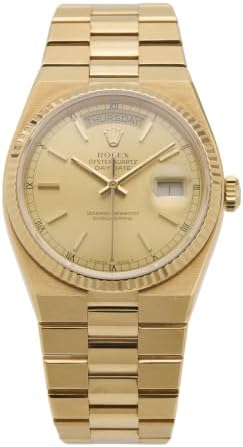
The Oysterquartz Day-Date, reference 19018, in 18k gold. It runs on a battery, so ask when it was last changed and when the movement was last serviced. Listed as pre-loved, sold by What Goes Around Comes Around.
Collector’s note: pre-owned. Offered by What Goes Around Comes Around, an independent reseller. Authenticated by the seller. Returns follow Amazon Luxury policy. Listings change, and price and availability are set by the seller on Amazon. Ask the seller for the serial and papers before you buy. Finely Owned is independent and isn’t affiliated with Rolex. As an Amazon Associate I earn from qualifying purchases.
Why it costs what it does
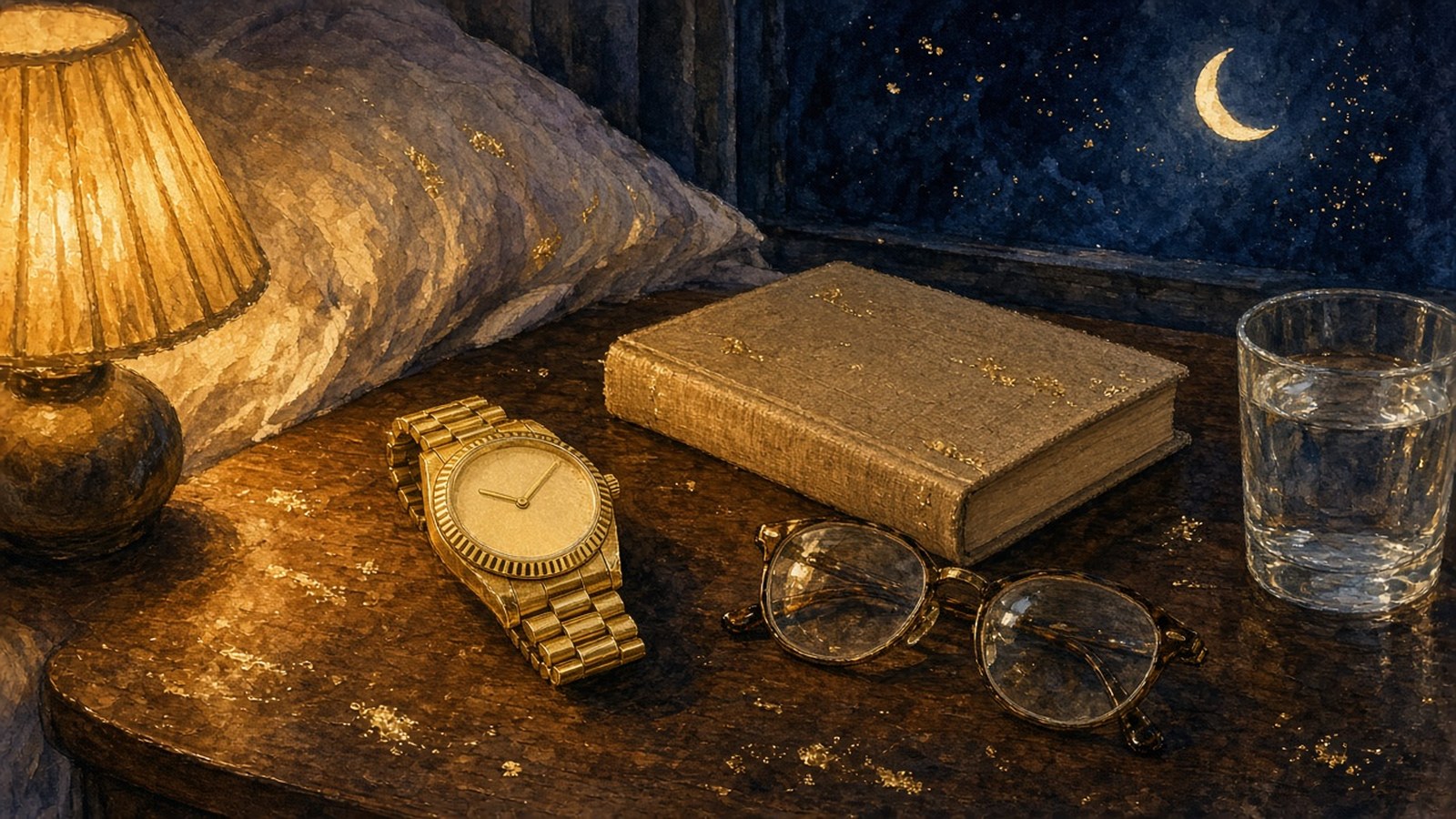
You’re paying for gold or platinum you can feel, a day window that has never abbreviated anything, and a bracelet so tied up with power that it lent its name to the whole watch. As of October 22, 2026, Rolex’s US site lists the Day-Date 36 in yellow gold from $45,900, and the Day-Date 40 in yellow gold from $50,400. Most people who buy one aren’t presidents. They just want a watch that says the work is done.
Sources
- Rolex, Day-Date
- Rolex US, Day-Date: all models and prices (accessed Oct 22, 2026)
- Hodinkee, How The Rolex Day-Date Became A Million-Dollar Watch (Feb 20, 2022)
- Wikipedia, Rolex Day-Date
- CBS News, JFK’s Watch Fetches $120,000 (Oct 18, 2005)
- Owner accounts: Rolex Forums, “Inherited my dad’s watch”; Rolex Forums, “My vintage Day-Date ref. 1803”; Rolex Forums, “Suspicious day date”
Footnotes
- Photograph: “Rolex Day-Date Lacquered Stella Dial” by Kevin Sweeney, via Wikimedia Commons (File:Rolex_Day-Date_Lacquered_Stella_Dial.jpg), licensed under CC0 1.0 Public Domain Dedication (resized for web). ↩
As an Amazon Associate I earn from qualifying purchases. Finely Owned is independent and isn’t affiliated with Rolex.