

It began as a practical bag for carrying papers, and it would probably have stayed one. Then a princess held it a little higher than usual, in front of the cameras, and the house that made it eventually gave it her name. This is the story of Grace Kelly’s Hermès bag: how it came to be called the Kelly, what the legend gets right, and what a pre-loved one should show you.
A bag held a little too high

In 1956, Grace Kelly, the Hollywood star who had just become Princess of Monaco, was photographed holding a brown leather Hermès bag in front of her body. She was in the early months of her first pregnancy, with the future Princess Caroline, and the bag, as Sotheby’s and The Guardian both tell it, was there to shield her from the photographers.
It didn’t work, not in the way she intended. One of those photographs made the cover of Life magazine, and the bag went around the world with it. Women began walking into Hermès and asking for the princess’s bag.
It’s worth noticing what kind of gesture that was. It wasn’t a styling choice or an endorsement. It was a private woman using the nearest sturdy object to keep something to herself. The bag became famous for doing its job.
Before it had her name

Hermès began as a harness and saddle maker, and the Kelly comes from that world. In 1892 the house introduced the Haut à courroies, a large leather bag with straps made to carry a rider’s boots and saddle. In the 1930s, Robert Dumas, the son-in-law of Émile Hermès, who later ran the company from 1951 to 1978, drew a smaller version for women.
Hermès describes his design precisely: a trapezoid shape, two triangular gussets, a cut-out flap, a single handle and two side straps. It was launched in 1935. The names it carried before Grace Kelly vary by source. Christie’s, Sotheby’s and The Guardian call it the Sac à dépêches, the dispatch bag. Older Hermès catalogues, according to Wikipedia’s account, called it a travel handbag, and others used the plainer “petit sac à courroies,” the small bag with straps. None of those names is very glamorous, and that’s rather the point. It was made to be used.
Hollywood, Monaco and a costume budget

Kelly met the bag before she met her prince. In 1954, Alfred Hitchcock let his costume designer, Edith Head, buy Hermès accessories for To Catch a Thief, which was filmed on the French Riviera with Kelly and Cary Grant. According to Head’s account, as recorded in a fashion history of the period, Kelly “fell in love” with the bag.
She married Prince Rainier III of Monaco in April 1956 and left Hollywood behind. The bag came with her. That’s the part of the story people tend to skip: she wasn’t handed a new bag for a photograph. She was carrying one she already owned and liked.
The photograph, and the renaming
After the Life cover, customers started calling the bag “the Kelly,” and eventually Hermès did too. When exactly is less certain than the legend suggests. Christie’s and Sotheby’s both say Hermès officially renamed it the Kelly in 1977. Other accounts say the change came in the late 1950s, and Hermès itself, on its own page about the bag, keeps the story gentle: “legend has it,” it writes, that she was photographed holding the bag over her stomach, after which the bag “shot to international fame and was renamed the Kelly.”
We’d put it this way. The public named it almost at once; the house made it official later. Either way, the Kelly is one of very few luxury objects named for a customer rather than a designer.
The battered original
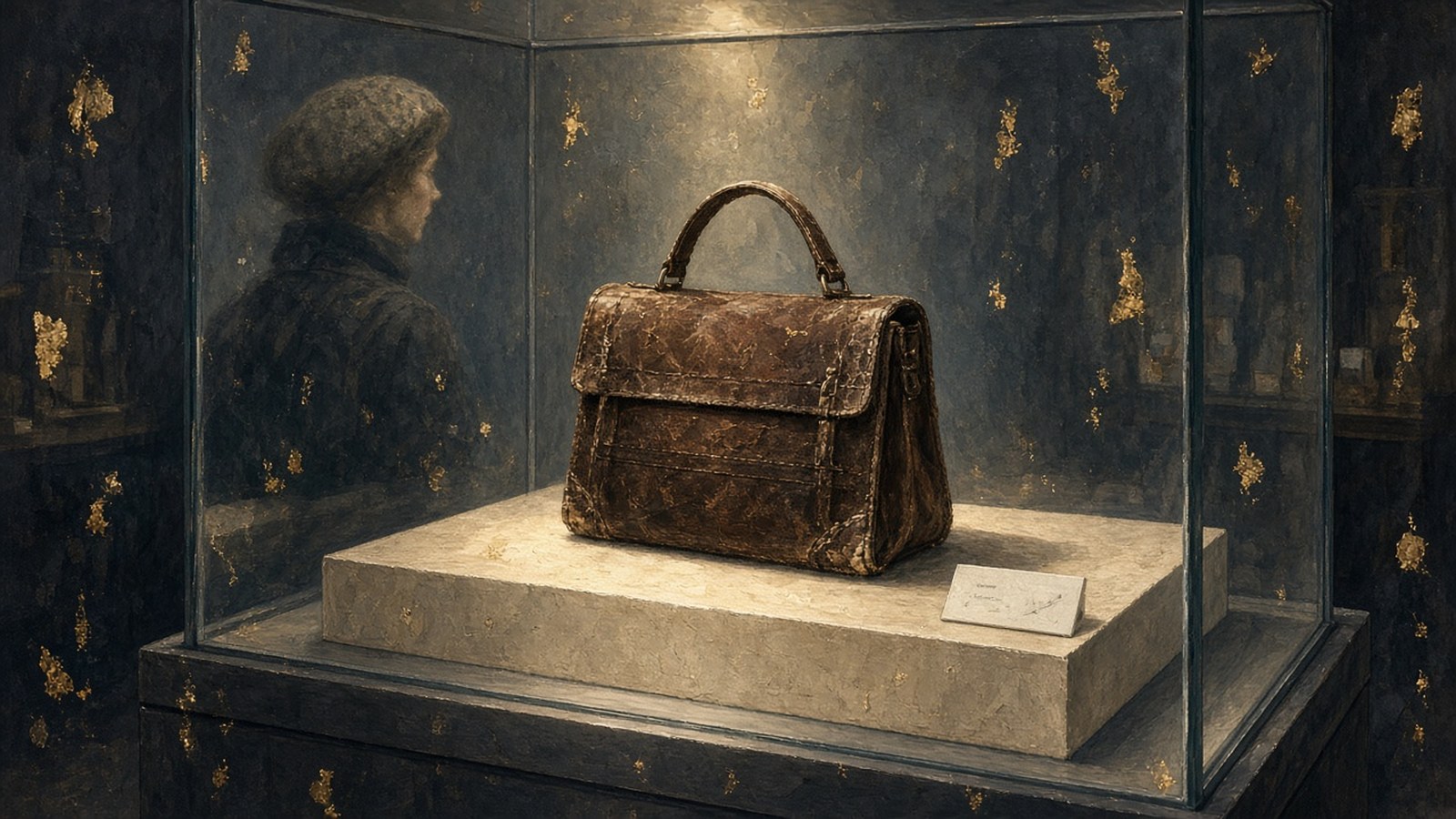
The bag itself survives. In April 2010 the Victoria and Albert Museum in London opened Grace Kelly: Style Icon, an exhibition of her wardrobe that included a Van Cleef & Arpels tiara, a Chanel suit and dresses by Yves Saint Laurent and Dior. The Guardian called the star exhibit “a battered brown leather handbag”: the original Hermès bag from 1956, lent by the palace archives in Monaco.
It’s scuffed and marked, because she kept using it. The Guardian noted that the wear made it clear she carried the same bag for many years, and that she was surprisingly thrifty with her wardrobe. The most famous handbag in the world, in other words, is a pre-loved one. We find that a comfort.
The curator, Jenny Lister, admitted she had thought carefully before calling the show a style icon exhibition. “It’s an overused phrase,” she told the paper. “There are very few people who really deserve to be called a style icon, but Grace Kelly is one of them.”
How a Kelly is made
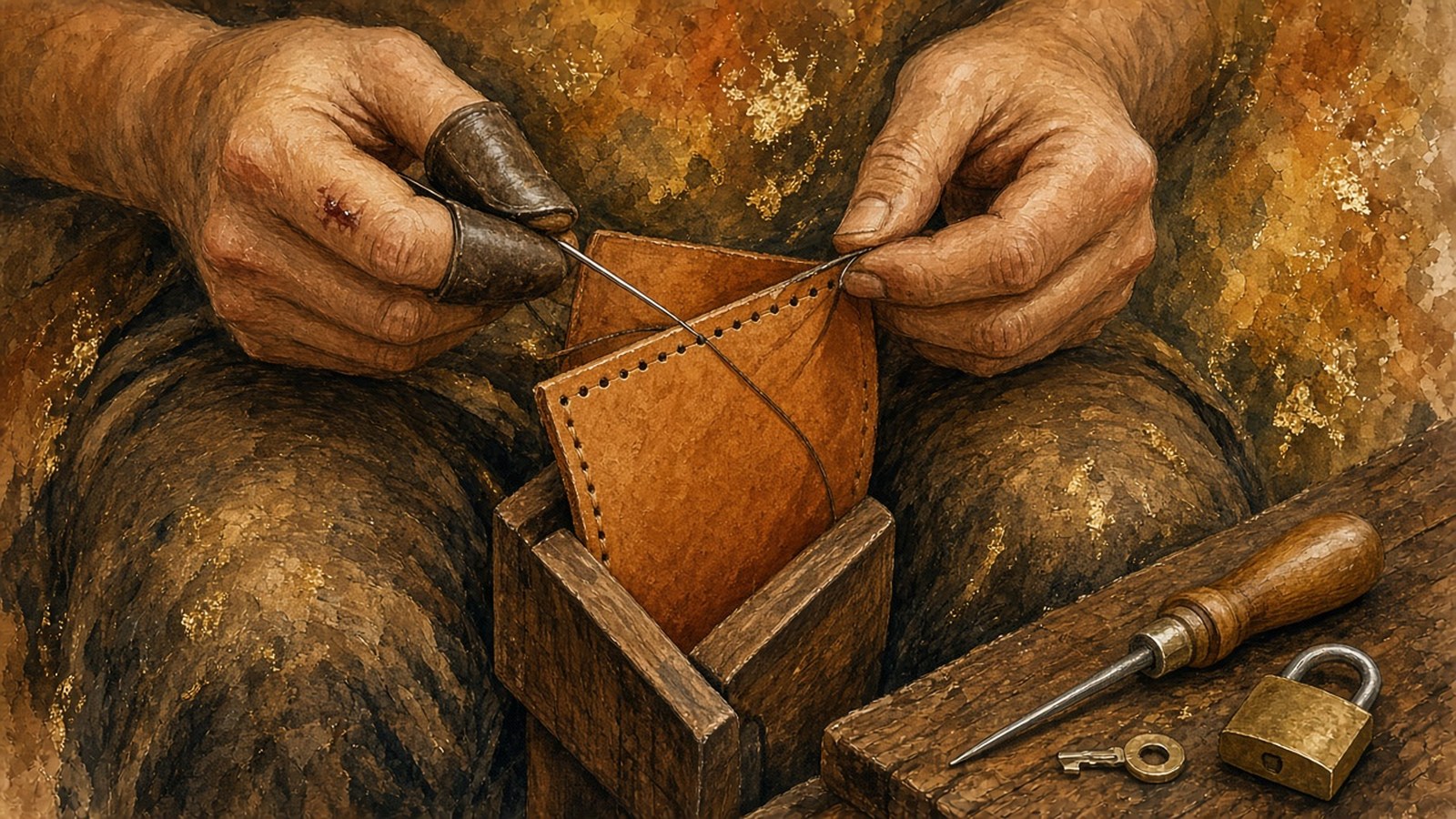
A Kelly is still made by one artisan from start to finish. Christie’s says each Kelly or Birkin can take up to 40 hours by hand, using the saddle stitch Hermès took from its harness work: two needles passing through the same hole from opposite sides, which, done properly, will never unravel. It can’t be done by machine.
The bag comes in two constructions. A Sellier Kelly is stitched on the outside, with sharp edges and a rigid shape; Christie’s notes that a structured leather like Epsom suits it. A Retourne Kelly is stitched inside out and turned, which gives softer, rounder edges and a more relaxed shape. Both have existed since the beginning. The base is built from layers of leather and stands on four metal feet, so it never sits directly on the floor. Sizes run from a rare 50 centimeters down to 20, and the little Kelly Pochette clutch arrived in 2004 in Jean Paul Gaultier’s first collection for the house. Smaller still was the Mini Kelly, made from the 1980s in sizes as small as 15 centimeters. Sotheby’s notes that Gaultier stopped its production in the mid-2000s in favor of larger bags, and that Hermès brought it back in 2016 as the Mini Kelly II, with a slimmer handle and a shape better suited to wearing across the body.
The Birkin, often confused with it, came much later, in 1984, after Jane Birkin met the then Hermès chief executive, Jean-Louis Dumas, on a flight. The Kelly is the elder by nearly fifty years.
Reading a pre-loved Kelly
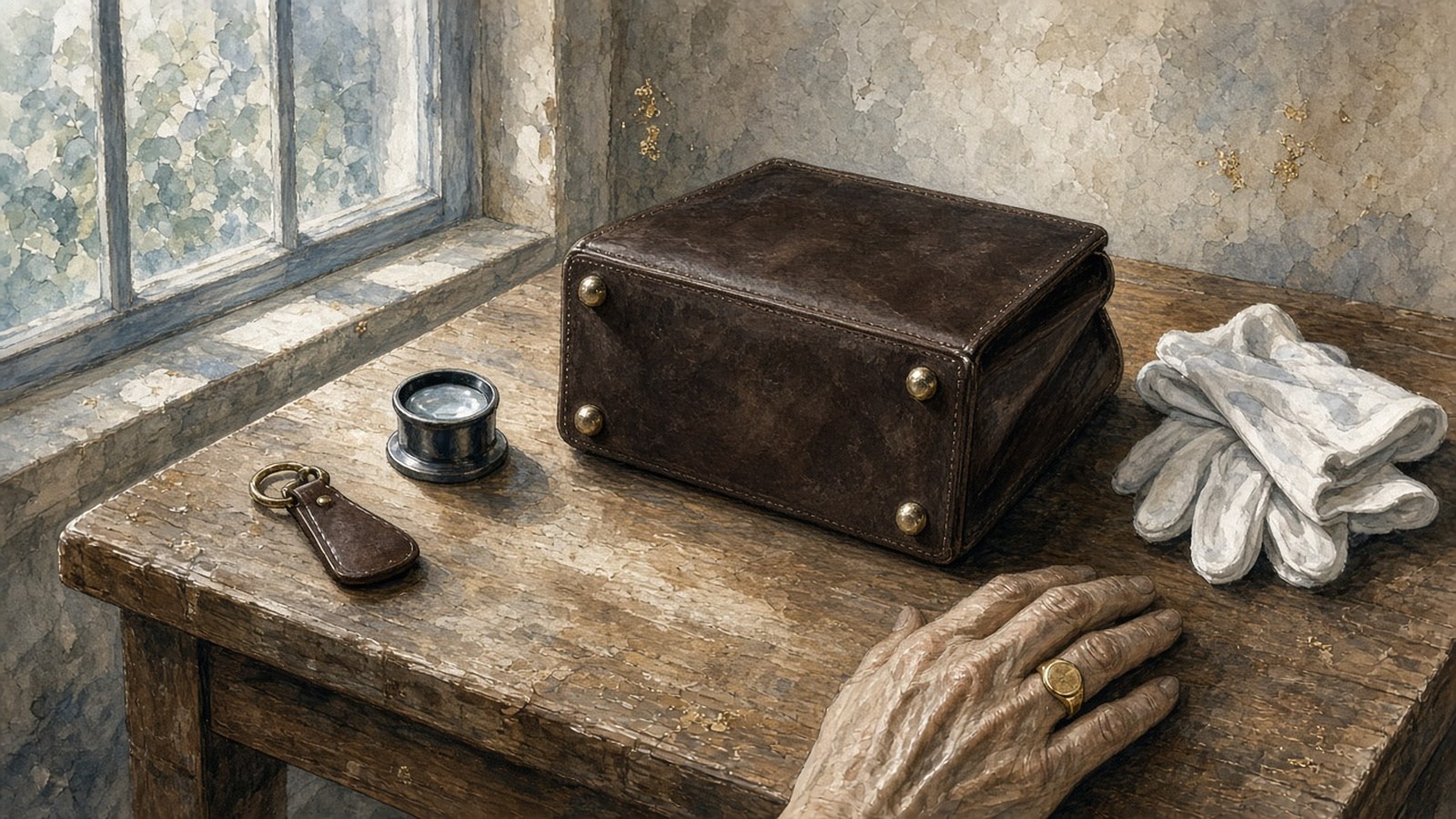
Christie’s head of handbags, Rachel Koffsky Parker, has set out what the auction house checks before it sells a Hermès bag, and her list is a good one to borrow:
- Stitching. It should look hand-done, and Koffsky Parker says it should slant slightly upwards.
- Stamps. On bags made after 1965, “Hermès Paris Made in France” should be crisp, centered and evenly spaced, usually on three lines that get smaller as they go down, in a color that matches the hardware.
- The date stamp. The small “blind stamp” inside should match the era of the bag’s style and leather, and it should be subtle; counterfeiters tend to press it too deep. Not every genuine bag has one.
- Hardware. The feet should be hammered in, not glued, and the padlock number should match its keys, which live in a small leather bell called the clochette.
- Paperwork. Hermès doesn’t issue authenticity cards. Christie’s says any bag sold with one is fake.
Condition matters, but wear isn’t a flaw in itself. The princess’s own bag proves that. What matters is that the wear is honest and the bag is right. The same thinking applies to watches, where a full set of box and papers can matter less than the object’s own evidence.
At the top of the market, the numbers are serious. Christie’s says a Himalaya Kelly 28 with white gold and diamond hardware sold in Hong Kong in 2021 for HK$4,000,000, around US$513,000, a record for any Kelly at auction. Most pre-loved Kellys are far plainer, and the plain ones are the ones she carried.
More figureheads
Finely Owned is a guide to pieces worth owning, and the stories behind them. If Grace Kelly’s bag shows how a name can attach itself to an object, Paul Newman’s watch shows it twice over: read how a wife’s engraving and a slow-selling chronograph became the Paul Newman Daytona. And for a founder who built a house on proof rather than legend, read about Hans Wilsdorf and the founding of Rolex. For the other bags worth knowing, and how to read one the way an appraiser would, begin with The Handbags Worth Knowing.
Questions people ask
Why is the Hermès Kelly named after Grace Kelly?
In 1956, the newly married Princess Grace of Monaco was photographed holding the bag in front of her to shield her first pregnancy from photographers. The picture appeared in Life magazine, customers began asking for “the Kelly,” and Hermès adopted the name.
When was the Kelly bag renamed?
Accounts differ. Christie’s and Sotheby’s say Hermès officially renamed it in 1977; other sources say the late 1950s. The public was calling it the Kelly well before either date.
What’s the difference between a Sellier and a Retourne Kelly?
A Sellier is stitched on the outside, with sharp edges and a firm shape. A Retourne is stitched inside and turned out, giving softer, rounded edges and a more relaxed look.
Sources
- Hermès, “The Kelly”
- Sotheby’s, “Anatomy of an Artwork: A Style Icon”
- Christie’s, Hermès Kelly bags
- Christie’s, “Birkin vs Kelly: full Hermès comparison guide”
- Christie’s, “How we know your Hermès handbag is the real deal”
- The Guardian, “Grace Kelly exhibition features famous battered handbag” (Apr 16, 2010)
- WWD, “Hermès Kelly Bag History”
- Wikipedia, Kelly bag