

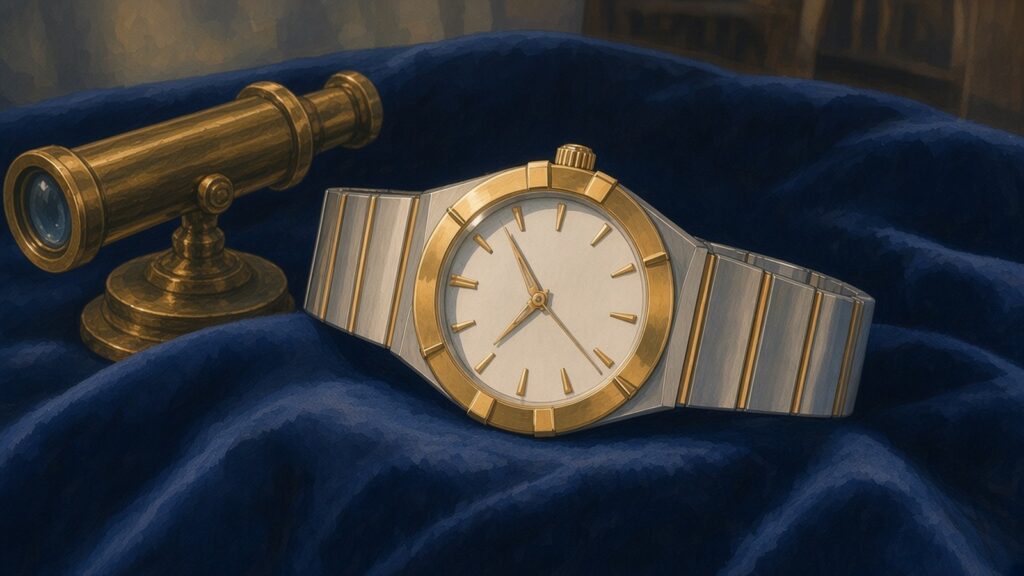
Omega launched the Constellation in 1952, and it became the world’s first family of watches to be completely chronometer certified (Omega). Its caseback medallion shows an observatory under eight stars, one for each of eight precision records Omega set at Kew-Teddington and the Geneva Observatory (Omega). Today Omega lists the Constellation 39 mm in steel at $7,400 (Omega). Here is whether the Omega Constellation is worth it, how the claws came about, and what the pre-owned listings we found ask today.
As an Amazon Associate I earn from qualifying purchases. Finely Owned is independent and isn’t affiliated with Omega. All prices and availability are accurate as of November 11, 2026 at 3:13 PM ET and are subject to change. Any price and availability information displayed on Amazon.com at the time of purchase will apply.
The verdict
The Constellation is worth it if you want a dressy, bracelet-integrated Omega with a long precision story, and you are happy to buy pre-owned. New, the steel 39 mm Co-Axial Master Chronometer is $7,400 and the steel 29 mm models start at $8,500 (Omega, Omega). The pre-owned Constellations we found today ask from $1,330 for a 22 mm quartz to $3,165 for a 24 mm Orbis Star.
Read the honest downsides and before you buy.
All prices and availability are accurate as of November 11, 2026 at 3:13 PM ET and are subject to change. Any price and availability information displayed on Amazon.com at the time of purchase will apply.
Best first Constellation
Saves it in your cart for later. No purchase until you check out.
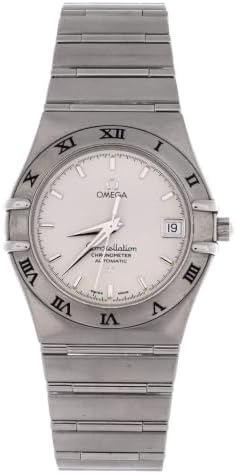
A pre-loved Omega Constellation Chronometer Co-Axial automatic, 35 mm, white dial, on its steel bracelet, graded Good with moderate scratches and wear on the case and band. The bracelet is listed for an 8-inch wrist, so ask about extra links if yours is smaller. Listed as pre-loved; check the seller and condition named on the listing.
Best for a silver dial

Saves it in your cart for later. No purchase until you check out.
A pre-loved Omega Constellation Co-Axial Chronometer automatic, 35 mm, silver dial, steel bracelet, graded Good with scratches on the crystal, case and band. Ask the seller for the full reference number, since it asks more than the white-dial listing above. Listed as pre-loved; check the seller and condition named on the listing.
Collector’s note: pre-owned. Offered by independent resellers on Amazon, not by the maison. Authentication is the seller’s. Returns follow Amazon Luxury policy. Listings change, and price and availability are set by the seller on Amazon. Ask the seller for the serial, the hallmarks and any papers before you buy. Finely Owned is independent and isn’t affiliated with Omega. As an Amazon Associate I earn from qualifying purchases.
Is the Omega Constellation worth it?
Yes, if you want an elegant Swiss watch from a major house that most people will not recognize across a room, and you buy it pre-owned. The honest caveat: the pre-owned Constellations on this page ask a fraction of Omega’s new prices, which tells you how much value a new one gives up. Buy one to wear, not to sell.
Where did the Constellation come from?
From Omega’s 100th birthday. In 1948 the company marked its centenary with the Centenary, a certified chronometer with an automatic movement, and the Constellation followed in 1952 (Omega). Hodinkee reports that Omega made 6,000 Centenary watches, all in solid gold, and built the new collection on its success (Hodinkee). An observatory emblem has appeared on every Constellation caseback since the launch; Omega says the cupola is more likely a generic image than the Geneva Observatory of legend (Omega). Early models had the twelve-sided “pie-pan” dial collectors still look for (Monochrome).
What are the Constellation claws?
Four polished “griffes,” two at 3 o’clock and two at 9, introduced on the Constellation Manhattan in 1982. The design was by Carol Didisheim, who joined Omega in 1980, and the claws began as clamps, screwed through the caseback to press the crystal and gasket so an ultra-thin quartz case could stay water-resistant (Hodinkee). Monochrome notes the design was patented in 1985 and that early Manhattans had their markers on the crystal; by 1995 the Roman numerals had moved to the bezel (Monochrome). Automatic calibres returned in 1984, and the first Co-Axial Constellation followed in 2003 (Hodinkee).
Constellation listings and prices, as listed today
| Listing | Size and movement, as listed | Price, as listed |
|---|---|---|
| Constellation Orbis Star, black dial | 24 mm, quartz | $3,165 |
| Constellation Co-Axial Chronometer, silver dial | 35 mm, automatic | $3,075 |
| Constellation 111.15.23.60.55.001, white shell dial | 23 mm, quartz | $2,319 |
| Two-tone Constellation 396.1070, white dial, day-date | 33 mm, quartz | $1,943 |
| Constellation Chronometer Co-Axial, white dial | 35 mm, automatic | $1,830 |
| Steel Constellation 1567.89, blue dial | 22 mm, quartz | $1,330 |
Listing prices are from the resellers’ Amazon listings, as of November 11, 2026 at 3:13 PM ET. Omega’s US prices are $7,400 for the steel 39 mm Constellation and from $8,500 for the steel 29 mm models (Omega, Omega).
Which Constellation should you buy first?
An automatic 35 mm if you want the mechanical chronometer the name was built on. A quartz model if you want a light, grab-and-go dress watch that only needs a battery. The smallest cases, 22 to 24 mm, are true ladies’ sizes; measure your wrist before you choose by photos alone.
Best day-date value
Saves it in your cart for later. No purchase until you check out.
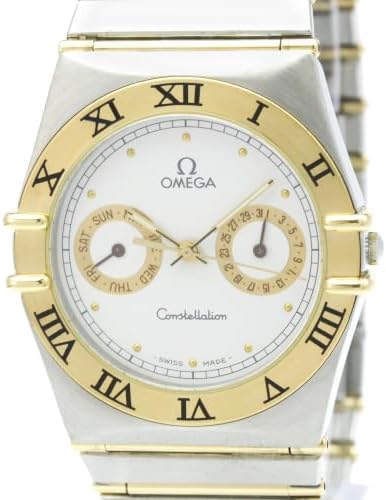
A pre-loved two-tone Omega Constellation 396.1070, 33 mm, white dial, quartz with day and date, graded Very Good with slight scratches and some deterioration on the dial. The listing notes it has been polished and the battery replaced. Listed as pre-loved; check the seller and condition named on the listing.
Best small wrist

Saves it in your cart for later. No purchase until you check out.
A pre-loved steel Omega Constellation 1567.89, 22 mm, blue dial, quartz, graded Very Good with slight scratches, polished and with a new battery. Check the wrist size of about 5.5 inches against your own. Listed as pre-loved; check the seller and condition named on the listing.
Collector’s note: pre-owned. Offered by independent resellers on Amazon, not by the maison. Authentication is the seller’s. Returns follow Amazon Luxury policy. Listings change, and price and availability are set by the seller on Amazon. Ask the seller for the serial, the hallmarks and any papers before you buy. Finely Owned is independent and isn’t affiliated with Omega. As an Amazon Associate I earn from qualifying purchases.
Should you buy a Constellation new or pre-owned?
New if you want the current Master Chronometer calibre 8800, with 55 hours of power reserve and resistance to magnetic fields above 15,000 gauss (Omega), and Omega’s five-year warranty. Pre-owned if you want the look for much less; most of the listings we found are older quartz or Co-Axial models, not the current Master Chronometers, so compare like for like. For Omega’s dive watch, read Is the Omega Seamaster Worth It?.
Best for a dark dial

Saves it in your cart for later. No purchase until you check out.
A pre-loved Omega Constellation Orbis Star quartz, 24 mm, black dial, steel bracelet for a 6.5-inch wrist, graded Very Good with minor scratches on the case and band. Ask whether the battery has been replaced recently. Listed as pre-loved; check the seller and condition named on the listing.
Best for a pearly dial

Saves it in your cart for later. No purchase until you check out.
A pre-loved Omega Constellation 111.15.23.60.55.001, 23 mm, with a white shell dial, quartz, graded Very Good with slight scratches, polished and with a new battery. Ask the seller what the dial and any stones are. Listed as pre-loved; check the seller and condition named on the listing.
Collector’s note: pre-owned. Offered by independent resellers on Amazon, not by the maison. Authentication is the seller’s. Returns follow Amazon Luxury policy. Listings change, and price and availability are set by the seller on Amazon. Ask the seller for the serial, the hallmarks and any papers before you buy. Finely Owned is independent and isn’t affiliated with Omega. As an Amazon Associate I earn from qualifying purchases.
The honest downsides
- Resale. The pre-owned asks here are a fraction of new prices, so a new Constellation loses a lot of value once it leaves the boutique.
- Polishing. Several listings say the watch has been polished; heavy polishing can soften the half-moon facets and claws.
- Integrated bracelets. The bracelet is part of the design, and missing links can be costly to replace.
- Name confusion. Constellation covers quartz, automatic and Master Chronometer models over seven decades, so the name alone does not tell you what you are buying.
Before you buy
- Authenticity. Check the observatory medallion on the caseback and the reference and serial numbers, and use our authenticity checklist.
- Reference. Ask for the full reference number; it tells you the size, metal and movement.
- Condition and service. Ask when it was last serviced or, for quartz, when the battery was changed.
- Returns. Amazon Luxury returns must be unused and unaltered, inside the 30-day window, so don’t resize the bracelet or open the case before you decide.

Why a Constellation costs what it does
New, you are paying for Omega’s in-house Master Chronometer movement, the case and bracelet finishing and a five-year warranty (Omega). Pre-owned, you are paying mostly for the name and the design, which is why prices fall so far. For Omega’s most famous chronograph, read Is the Omega Speedmaster Worth It?, for a Swiss alternative at a similar price, see Is Longines Worth It?, and for a square dress watch, see Is the Cartier Tank Worth It?.
Questions people ask
Is the Omega Constellation worth it?
It is worth it if you want an elegant Omega with a precision history and you buy pre-owned. Omega lists the steel 39 mm at $7,400. The pre-owned Constellations we found ask $1,330 to $3,165, as of November 11, 2026 at 3:13 PM ET.
When did Omega launch the Constellation?
In 1952. Omega says it was the first family of watches to be completely chronometer certified.
What do the claws on the Omega Constellation do?
They began as clamps that held the crystal and gasket on the thin 1982 Constellation Manhattan. Today they are mostly a design signature.
Is the Omega Constellation a dress watch?
Mostly, yes. It has a slim profile, an integrated bracelet and 50 metres of water resistance on the current 39 mm model, which suits the office better than the pool.
For Omega’s other dress line, read Is the Omega De Ville Worth It?
Sources
- Omega, 1952: The first Constellation
- Omega, The Observer
- Hodinkee, A History of the Omega Constellation
- Monochrome, The History of the Omega Constellation
- Omega, Constellation 39 mm 131.10.39.20.02.001
- Omega, Constellation 29 mm 131.15.29.20.60.001
As an Amazon Associate I earn from qualifying purchases. Finely Owned is independent and isn’t affiliated with Omega. All prices and availability are accurate as of November 11, 2026 at 3:13 PM ET and are subject to change. Any price and availability information displayed on Amazon.com at the time of purchase will apply.